


Search
Enter keywords to search for products, blog posts, and more.

Enter keywords to search for products, blog posts, and more.
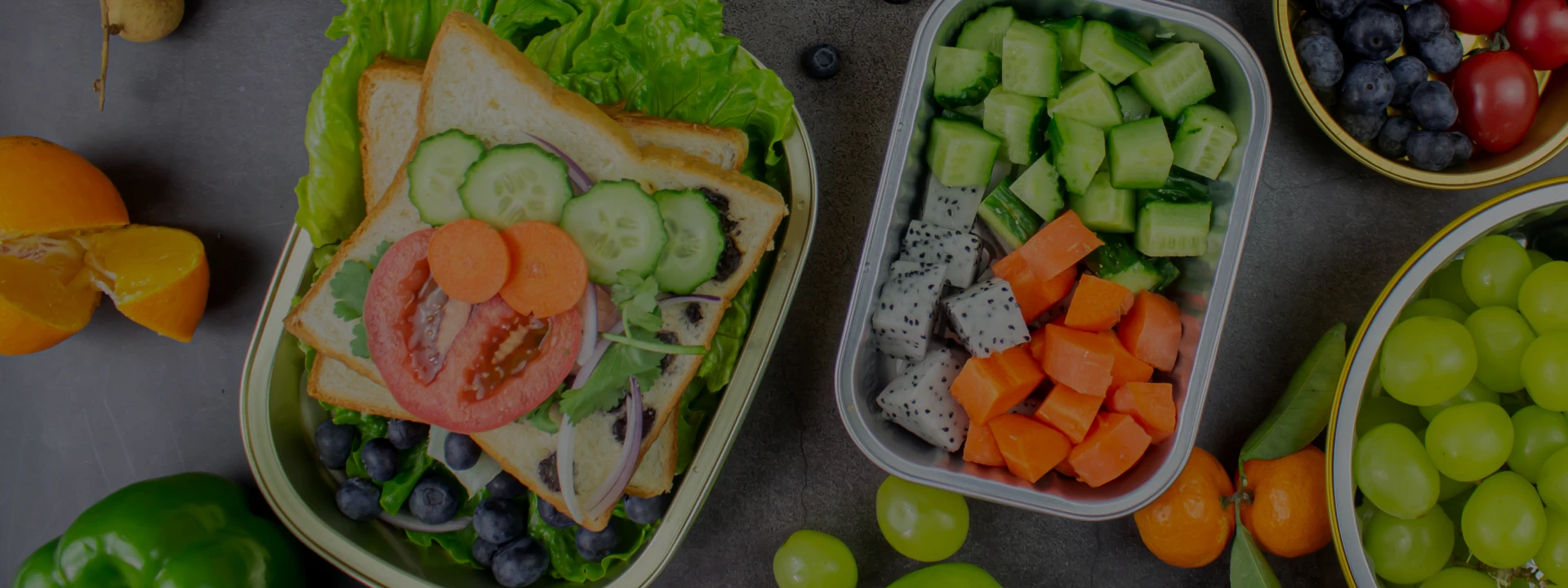
SEPACK offers custom aluminum foil packaging for distributors, brands, and foodservice operators who need more than standard catalog items. Custom container dimensions, lid types, surface colors, embossing, and printed branding — all produced under FDA and BRC certified conditions.
We hold 3,000+ existing molds. If your size exists in our library, there is no tooling cost. If it does not, our in-house tool and die team develops new molds based on your drawings or samples.

| Custom Dimension | Any size from 1 oz to 400+ fl oz. Rectangular, round, oval, square, and specialty shapes. |
| Wall Type | Smooth wall or wrinkle wall |
| Material | 3003 or 8011 aluminum alloy. Thickness from 50 to 150 microns. |
| Rim Style | Full Curl (FC), Inverted Curl Flange (IVCF), Rolled Curl (RC), Hemmed Edge (VHE), Rolled Edge (RE) |
| Colors | Silver (plain), black, gold, white, red, blue, green, or any Pantone color |
| Lid Options | Foil lid, clear dome lid, board lid, vented lid. Custom lid colors and printing available. |
| Printing | Flexographic printing on containers and lids. Up to 6 colors. Logo, pattern, and text. |
| Embossing | Custom embossed logos, patterns, and textures on container bottom or lid surface |
| Tooling | 3,000+ existing molds. New mold development available with customer drawings or samples. |
| Certifications | FDA, BRC, ISO 9001, Kosher, CE, SGS, BSCI, RoHS |
| Packing | Custom carton size, labeling, and palletization per customer requirement |


MOQ depends on the type of customization. Custom sizes using existing molds have lower minimums than new tooling projects. Custom color and printing orders typically start from a set quantity per SKU. Contact SEPACK with your specifications for an exact MOQ.
MOQ depends on the type of customization. Custom sizes using existing molds have lower minimums than new tooling projects. Custom color and printing orders typically start from a set quantity per SKU. Contact SEPACK with your specifications for an exact MOQ.
MOQ depends on the type of customization. Custom sizes using existing molds have lower minimums than new tooling projects. Custom color and printing orders typically start from a set quantity per SKU. Contact SEPACK with your specifications for an exact MOQ.
MOQ depends on the type of customization. Custom sizes using existing molds have lower minimums than new tooling projects. Custom color and printing orders typically start from a set quantity per SKU. Contact SEPACK with your specifications for an exact MOQ.
MOQ depends on the type of customization. Custom sizes using existing molds have lower minimums than new tooling projects. Custom color and printing orders typically start from a set quantity per SKU. Contact SEPACK with your specifications for an exact MOQ.
Most buyers deal with the finished product — a container in the right size, color, and print. But understanding what happens between your initial request and the first shipment helps set realistic timelines, avoid common mistakes, and get better results on custom projects.
The process starts with what you need the container to do. Dimensions, depth, capacity, wall type, rim style, lid compatibility, oven or freezer use, and whether the container needs to be stackable or nestable. These functional requirements determine the alloy, temper, gauge, and forming method.
A common mistake at this stage is specifying dimensions without considering how the container will be used in production. A container designed for an automatic filling line needs tighter dimensional tolerances and consistent rim flatness compared to one filled by hand.
SEPACK maintains a library of 3,000+ existing molds. If your required dimensions match or closely approximate an existing mold, production can begin without tooling costs or delays.
If a new mold is needed, the tool and die team works from your technical drawing or a physical sample. Mold materials (tool steel grade), cavity count, and press compatibility are determined based on the expected production volume and container geometry.
Key factors that affect mold complexity: depth-to-width ratio (deeper containers require more forming stages), rim style (full curl needs a separate curling operation), and whether the container has embossed features on the bottom or sides.
Aluminum coil is selected based on alloy (3003 or 8011), temper (O, H22, H24), and gauge (thickness). For colored containers, the coil is pre-coated with food-grade lacquer in the specified color before being slit to the required width for the press.
Pre-coating happens before forming, not after. This means the color bonds to the aluminum at the coil stage and survives the stamping process without cracking or flaking. Post-forming painting is not used for food containers because it cannot guarantee even coverage inside deep-drawn shapes.
The prepared coil feeds into a press. Wrinkle wall containers are formed in a single stroke — the press pushes the blank into a die cavity, and the side walls pleat as they are compressed. Smooth wall containers require a multi-stage deep draw process where the blank is progressively stretched through a series of dies.
Press speed, blank holder force, and lubrication all affect the quality of the finished container. Too much force tears the foil. Too little force causes wrinkles in smooth wall products. These parameters are dialed in during the first production run and documented for repeat orders.
After forming, the container edge is trimmed to remove excess material, then curled or folded into the specified rim style. Full curl rims go through a dedicated curling station. IVCF rims are folded inward. The rim operation determines whether lids will fit properly and whether containers stack without jamming.
If the order includes printed branding, containers or lids pass through a flexographic printing station. Registration (alignment of colors and artwork) is checked against the approved proof. Embossing — raised logos or patterns — is done during or immediately after forming, using a textured die surface.
Finished containers are checked for dimensional accuracy, rim integrity, surface defects, color consistency, and print registration. Containers are nested, counted, and packed into cartons. Carton labeling, palletization, and shipping documentation are prepared per the customer’s import requirements.
The entire process from new mold approval to first shipment typically spans several weeks. Repeat orders using existing molds and pre-approved artwork move significantly faster because steps 2 and 6 are already established.
