

Search
Enter keywords to search for products, blog posts, and more.

Enter keywords to search for products, blog posts, and more.
Foil-Laminated, Insulated & Custom-Printed Deli & Burger Wrap — Wholesale, OEM & Private Label
SEPACK manufactures foil-laminated sandwich wrap paper — the insulated deli and burger wrap that keeps hot food hot and carries a printed brand. A foil backing bonded to a paper face holds heat and seals the wrap, while the paper side resists grease and prints clean for logos and artwork. Pre-cut sheets or rolls, plain or fully custom-printed. Wholesale and private-label, for delis, burger chains, food trucks and catering.

| Type | Construction | Insulates | Best For | Printable |
|---|---|---|---|---|
| Foil-laminated | Foil + paper | Yes | Hot sandwiches, burgers | Yes |
| Insulated deli wrap | Foil + paper | Yes | Subs, hot deli, takeaway | Yes |
| Greaseproof | Coated paper | No | Cold sandwiches, pastries | Yes |
| Kraft / unwaxed deli | Paper | No | Dry items, liners | Yes |
Common formats are pre-cut sheets (single sandwich to large sub) and rolls; sizes, grade and print are set per order. For plain foil pop-up sheets see aluminum foil sheets; for parchment, see parchment paper.


The paper a sandwich is wrapped in is doing more work than it looks. It has to keep the food at the right temperature, stop grease soaking through, hold a seal in a delivery bag, and — increasingly — carry the brand. No single material does all of that equally, so the first decision is which wrap type fits the food. This guide covers the types, why foil-laminated holds heat, and how printed wrap doubles as branding.
Sandwich wrap comes in a few materials. Foil-laminated wrap bonds foil to paper and is the only type that insulates, so it owns hot sandwiches and burgers. Greaseproof and coated papers resist oil without insulating, which suits cold subs, pastries and bakery. Wax paper and kraft are lighter, lower-cost options for dry or cold items and liners. Parchment is its own material for baking and cold wrapping — covered on the parchment paper page. Matching the type to whether the food is hot or cold is the call that matters most.
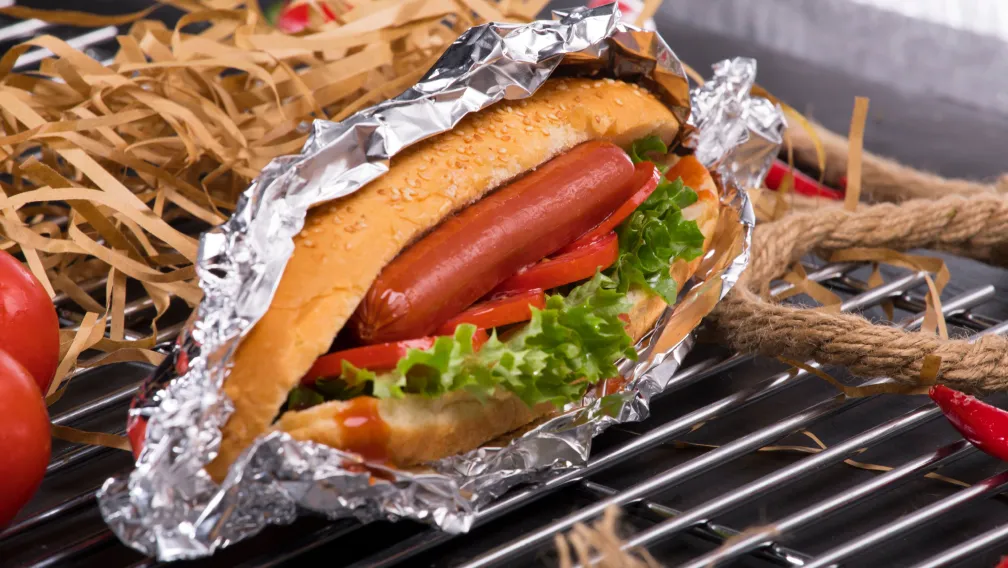
Heat leaves hot food by radiation, and foil reflects it back. Laminating a thin foil layer to the paper turns a wrap into an insulator: the foil bounces the food’s own heat back inward while the paper face handles grease and print. That is why a burger wrapped in foil-lined paper is still warm at the customer’s table and one in plain paper is not. For takeaway and delivery, where minutes pass between the pass and the first bite, the insulation is the difference between a hot sandwich and a lukewarm one.
The wrap is the last thing a customer touches and the thing they hold while they eat, which makes it prime branding space. A printed logo, pattern or message turns a commodity wrap into a brand impression at every meal, and for delivery it carries the brand into the customer’s home. Print runs in one or more colors on the paper face; the cost sits in the print tooling, so printed wrap carries a higher minimum than plain but pays back in brand visibility. Custom size and print are the reason most delis and chains order wrap rather than buy generic.
Like foil, wrap comes pre-cut or on a roll. Pre-cut sheets feed a fast wrapping station — one sheet per sandwich, consistent size, no cutting — which suits a high-volume deli or burger line. Rolls let a kitchen size the wrap on the spot for odd or large items. A counter that wraps the same items all day wants sheets; one with varied sizes wants a roll. Both come in the same materials and prints.
All of these wraps are food-grade and meet FDA and EU food-contact requirements, so they clear North American, European and export markets. On disposal, greaseproof and kraft papers are recyclable or compostable depending on coating, while foil-laminated wrap combines two materials that separate for recycling where facilities allow. A brand marketing on sustainability should match the wrap type to the disposal story it wants to tell.
Sandwich wrap is a private-label product at its core: the size, material and print are built to the brand, and the wrap ships ready to use under the brand’s name. Runs go as plain stock or custom-printed, in sheets or rolls, sampled and approved before bulk. Because the wrap is made alongside foil sheets, film and containers, a deli or chain can source the wrap station and the rest of its packaging from one supplier and consolidate freight.