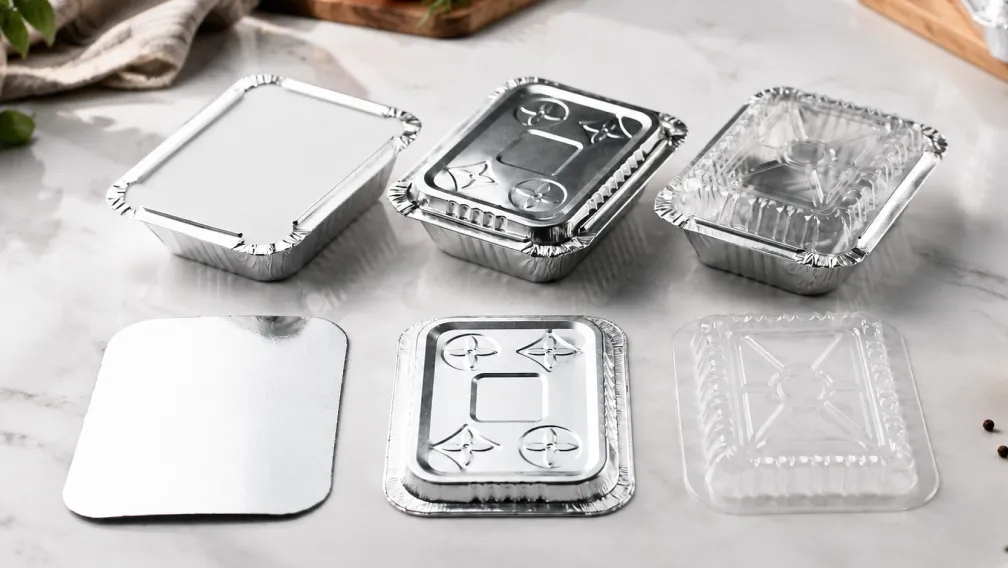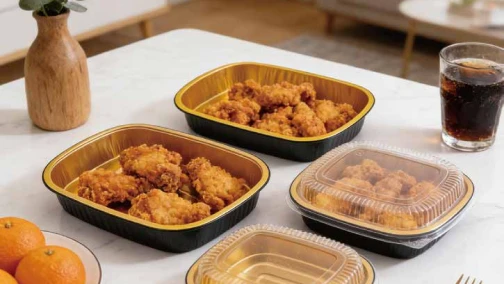


Buyers often select an aluminum container by size and price, then treat the lid as an afterthought. In practice the lid drives the specification: it determines the rim profile of the container, the sealing equipment on the packing line, the shelf life of the product, and a large share of the delivered cost. Aluminum foil containers with lids are supplied with four principal closure systems: foil-laminated board lids, clear plastic dome lids, heat-sealed films or foil membranes, and flat foil transport lids. This guide explains how each system works, which rim it requires, and which sales channel it serves.
Why the Lid Decision Comes First
A lid and a container are not two independent purchases. A crimped board lid needs a curled rim to grip; a heat-sealed film needs a flat flange to bond to. Once a packing line is tooled for one system, switching to another means new tooling, new lids, and often new containers. Procurement teams that fix the closure system early avoid the most common sourcing error in this category: a container and lid that nominally match in size but fail under real transport conditions.
The closure also sets the commercial ceiling of the product. A crimped lid supports same-day consumption. A hermetic heat seal supports a week of refrigerated distribution. Choosing the closure is therefore a channel decision before it is a packaging decision.
Foil-Laminated Board Lids
The workhorse of the takeaway trade is the board lid: paperboard laminated with a thin aluminum layer, supplied foil-side down, and crimped over the container rim by folding the curl around its edge. The foil face reflects heat back toward the food and resists grease; the board face accepts flexographic printing, so the lid doubles as a branding surface and a space for reheating instructions.
Board lids crimp in seconds with finger pressure and need no machinery, which is why high-volume delivery kitchens standardize on them. They hold heat well across a 30-to-60-minute delivery window and protect against spills from jolting, though the crimp is a mechanical closure rather than an airtight seal. Cost per lid is the lowest of the four systems, and lids nest flat, so cartons are compact and freight-efficient.
Clear Plastic Dome Lids
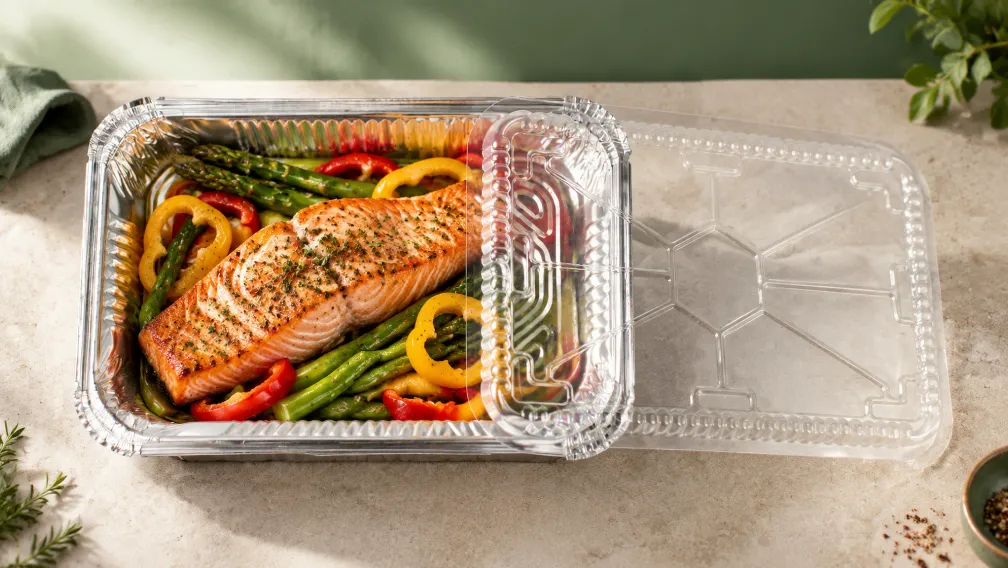
Dome lids are thermoformed from PET or polypropylene and snap over a full-curl rim. Their commercial function is visibility and headroom: the customer sees the product, and the raised dome clears frosted cakes, piled salads, or overfilled portions that a flat lid would crush. Bakeries, supermarket grab-and-go cases, and deli counters rely on this format. Aluminum foil pans with handles paired with dome lids are a standard cake and roast program in North American retail.
Temperature limits define the boundaries of this system. PET domes are for cold and ambient display only; they deform well below oven temperatures and must be removed before reheating. Polypropylene domes tolerate microwave reheating at moderate settings. Neither belongs in a convection oven. The foil base itself remains oven-safe to 250°C, so consumer instructions should state plainly: remove lid before oven use. Dome lids also serve as overpack protection for pre-lidded products: a retailer can heat-seal or board-lid the container for food safety, then cap it with a dome for presentation and stack protection in the display case.
Heat-Seal Films and Foil Membranes
Smooth-wall aluminum containers close with a lidding film or aluminum membrane bonded to the flat flange by a tray sealer. This is the only closure of the four that produces a hermetic seal, and it unlocks the applications that crimped lids cannot serve: modified atmosphere packaging, cook-chill ready meals, airline catering, and retail chilled distribution with five-to-ten-day shelf life.
Films are specified by function. Peelable films let the consumer open the pack without tools; anti-fog coatings keep chilled product visible in the retail case; dual-ovenable films survive regeneration at around 200°C so the meal heats in its sealed pack. Aluminum membranes replace film where a full oxygen and light barrier is required, at the cost of transparency. Sealing equipment ranges from manual bench sealers for a central kitchen to automatic inline sealers for industrial meal production, and the tooling is cut to the exact tray flange, so film, tray, and tooling must be specified together.

Flat Foil Lids for Transport and Steam-Table Service
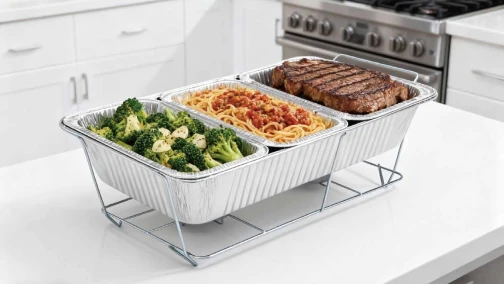
Caterers moving filled pans to an event venue use flat foil lids that crimp over the rim of steam table pans and gastronorm-format containers. The foil lid is oven-safe, so a pan can be reheated covered, and it is rigid enough to allow stacking of loaded pans in a hot box. This system prioritizes logistics over presentation: the lid is removed and discarded at the point of service. Foil lids are also the standard closure for aluminum roasting pans sold into institutional kitchens, where covered roasting and transport happen in the same pan.
Rim Compatibility Reference
| Lid system | Required rim | Seal type | Oven-safe in place | Primary channel |
|---|---|---|---|---|
| Foil-laminated board lid | Full curl or interrupted vertical curl | Mechanical crimp | Yes (lid is foil-faced) | Takeaway, delivery |
| PET dome lid | Full curl | Snap fit | No; remove before heating | Bakery, retail display |
| PP dome lid | Full curl | Snap fit | Microwave only | Deli, grab-and-go |
| Heat-seal film / foil membrane | Flat flange (smooth-wall) | Hermetic bond | Dual-ovenable films to ~200°C; membranes yes | Ready meals, airline, chilled retail |
| Flat foil lid | Full curl | Mechanical crimp | Yes | Catering transport, roasting |
Matching the Lid to the Sales Channel
Delivery and Takeaway
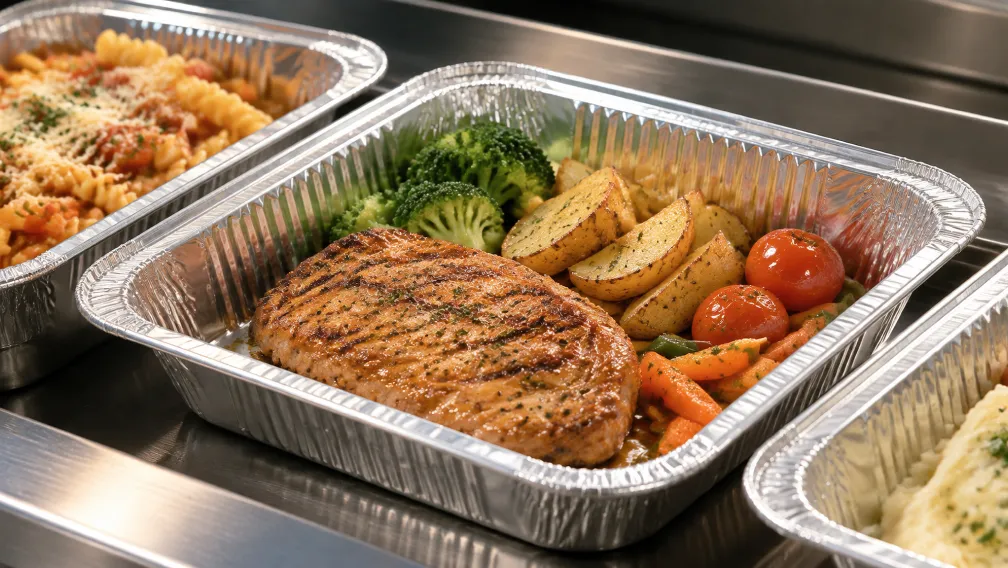
Board lids win on application speed, heat retention, and cost. A kitchen packing two hundred orders per meal period cannot afford a slow closure, and the printed board face carries the brand through the delivery bag. Standard rectangular aluminum foil pans with crimped board lids cover most menu formats.
Retail Display
Product visibility sells chilled and ambient food, so dome lids lead here. The clear dome turns the package into its own display case, and the foil base carries the product home and into the oven. Where the product is consumed cold, PET is adequate; where the customer may microwave, specify polypropylene.
Central Kitchen and Chilled Distribution
Any product with a shelf life measured in days needs the hermetic seal of a heat-sealed smooth-wall tray. The seal protects modified atmosphere, survives the cold chain, and gives the retailer a tamper-evident pack. The sealing machine is a capital item, but it is the only route into supermarket chilled listings.
Event Catering
Caterers need stacking strength and oven-to-table flexibility more than presentation. Flat foil lids let loaded pans stack in transport and reheat covered on site, which removes a handling step at the venue.
Specification Checklist
Stating the following points in the first inquiry prevents lid-container mismatches and shortens sampling:
- Container model and rim profile the lid must fit
- Closure method: crimp, snap, or heat seal
- Temperature exposure: cold display, microwave, convection oven, or covered transport
- Shelf-life target in hours or days, and whether modified atmosphere is planned
- Printing and branding requirements on the lid surface
- Sealing equipment on hand, if heat sealing is under consideration
- Annual lid volume, which often exceeds container volume where lids are also sold separately
Cost and Logistics Notes
Board lids and foil lids ship flat and nest densely, so their freight cost per unit is minimal. Dome lids are thermoformed and bulky; their shipping volume can exceed the container's, which is worth checking in any landed-cost comparison. Heat-seal film moves the cost from the lid itself to the equipment: film per pack is cheap, but the sealer and its tooling are a fixed investment that only pays back at volume. Buyers comparing closure systems should model cost per packed meal, including equipment amortization, rather than cost per lid.
Samples and Program Support
Sepack supplies all four closure systems matched to its container range and confirms lid-container fit by transit testing before orders ship. Custom printed board lids and custom-dimension programs run through the custom packaging program. Volume terms are on the wholesale program page, or contact the sales team with the checklist above for samples.
-

SEPACK
Aluminum Foil Packaging Manufacturer
SEPACK supplies aluminum foil containers, rolls, sheets, baking pans, and food wraps to distributors and foodservice businesses in 50+ countries. Headquartered in New York with manufacturing in Shanghai, operating since 2010.