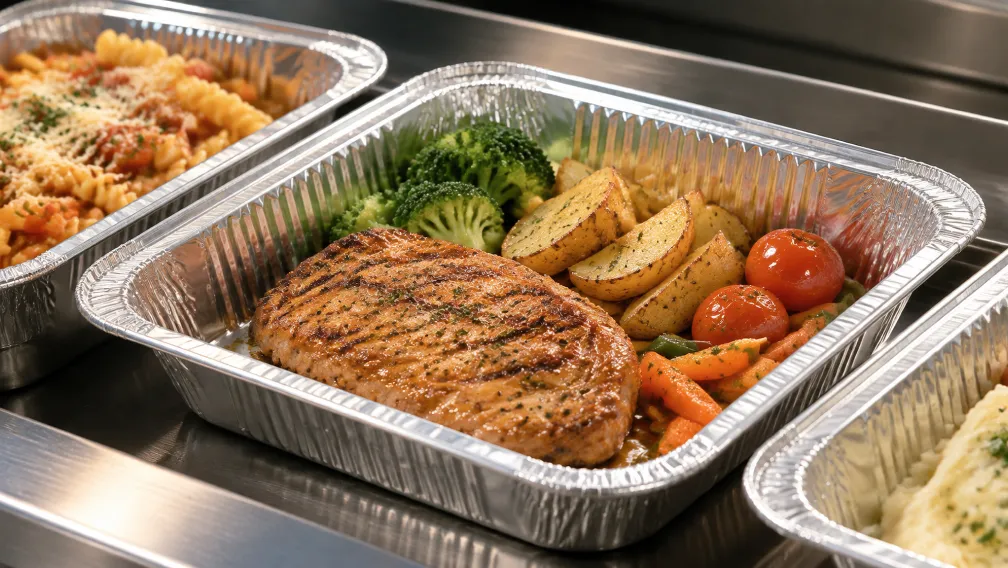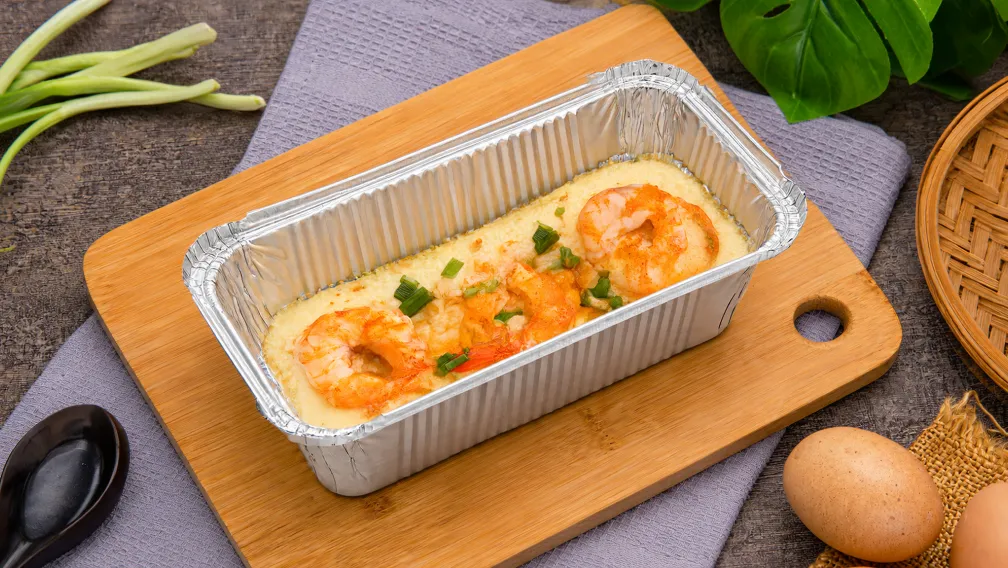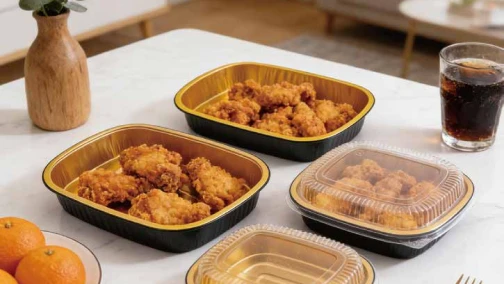


In the high-stakes environment of European hotel banquets, corporate event catering, and institutional cafeterias, the buffet line is a complex thermodynamic system. Maintaining exact food temperatures over a three-hour service window while preventing cross-contamination and optimizing visual presentation requires precision packaging. The undisputed champion of this modular efficiency is the half-size steam table pan. Formally designated as the GN 1/2 size under the European Gastronorm standard (EN 631), half steam pans allow executive chefs to divide a single chafing dish heat source into dual holding zones. However, executing this "split-pan" setup safely demands rigorous aluminum metallurgy, full-curl rim mechanics, and an understanding of thermal bridging across hot water baths.
The Gastronorm (GN 1/2) Dimensional Standard
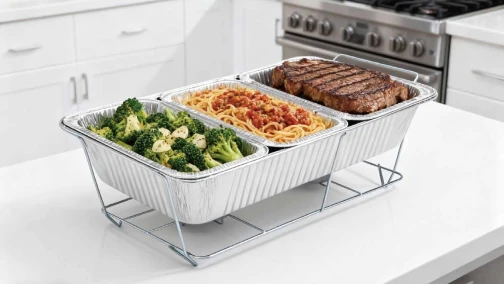
The foundation of European foodservice equipment is interchangeability. A full-size chafing dish is designed to hold a GN 1/1 pan, which measures exactly 530 mm by 325 mm. The GN 1/2 pan is precisely half of that footprint, measuring 325 mm by 265 mm. This exact mathematical relationship allows two half steam pans to sit side-by-side within a standard full-size water basin.
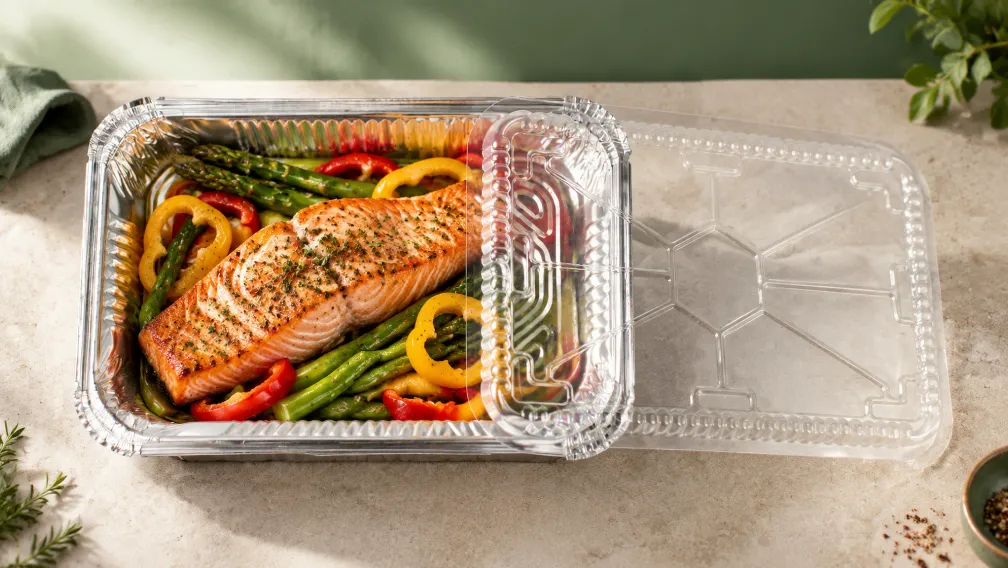
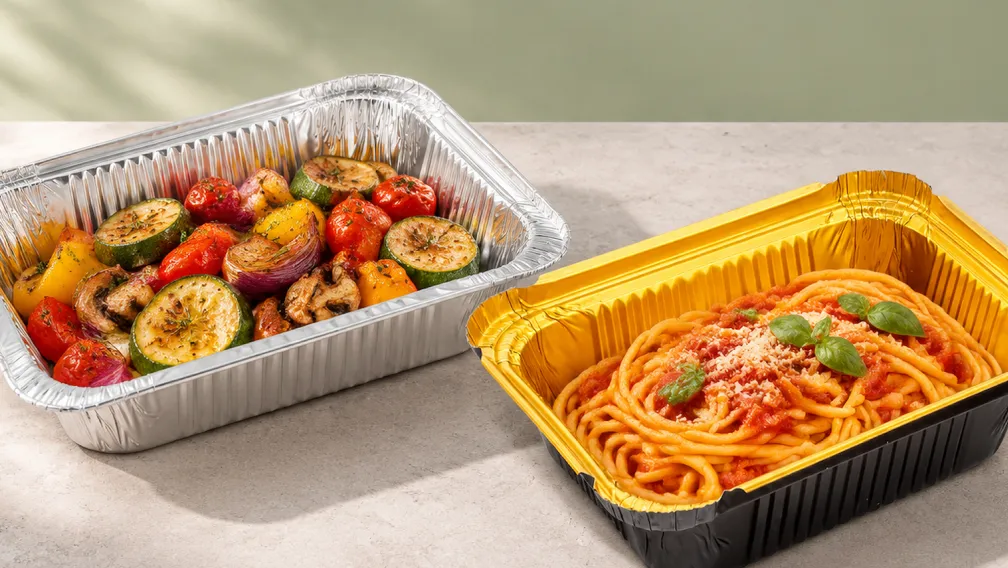
This modularity is the core of modern buffet economics. Instead of committing an entire 9-liter full-size pan to a slow-moving side dish, a catering manager can use a dual GN 1/2 configuration to present a high-value protein alongside a complementary starch—such as roasted salmon in the left pan and wild rice in the right. This halves the equipment footprint required on the buffet table, reduces food waste by controlling portion volume, and keeps the presentation looking full and fresh with more frequent, smaller-batch replenishments from the central kitchen.
Thermodynamics: Managing the Thermal Bridge
When two half steam pans share a single water bath, they introduce a phenomenon known as thermal bridging. The gap between the two pans acts as a vent, allowing steam from the 90°C water bath beneath to escape directly into the ambient air. If not managed properly, this steam loss rapidly depletes the water bath, lowering the overall holding temperature and risking non-compliance with Hazard Analysis Critical Control Point (HACCP) regulations, which mandate holding hot food above 60°C.
High-quality aluminum foil half pans combat this through precise flange engineering. The outer rims (flanges) are stamped to exact millimeter tolerances, ensuring that when two pans are placed side-by-side, their rims abut perfectly along the center line. Furthermore, aluminum's exceptional thermal conductivity (approximately 235 W/(m·K)) ensures that the metal instantly absorbs the heat from the trapped steam beneath, transferring it rapidly into the food mass before it can escape through the center gap. This rapid heat transfer guarantees that both the dense protein and the lighter starch maintain their required core temperatures independently, despite sharing the same heat source.
Mechanical Rigidity: Wrinkle-Wall and Full-Curl (FC) Construction
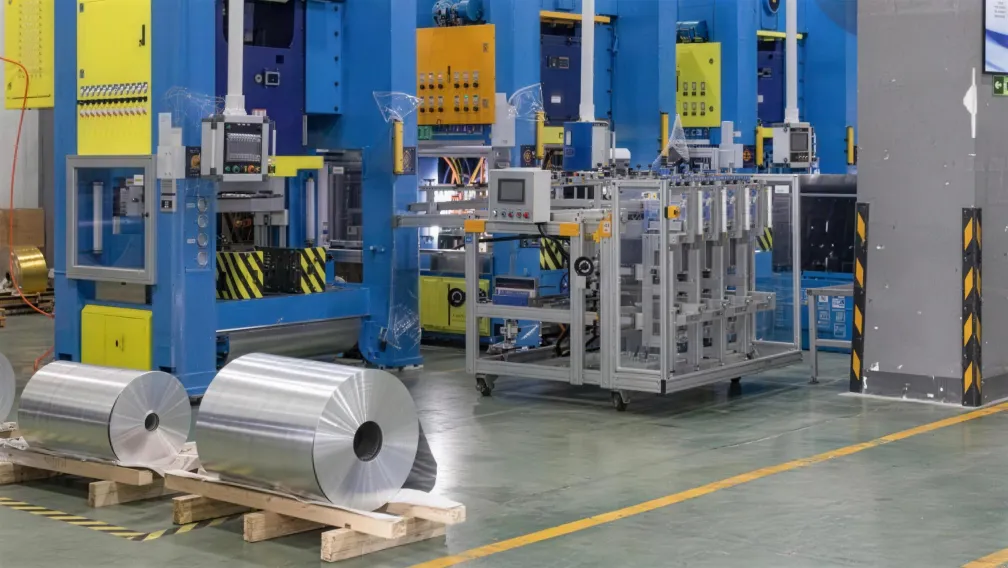
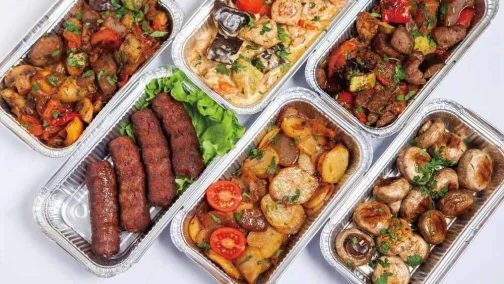
A GN 1/2 deep pan (typically 65mm or 80mm deep) can hold roughly 4 liters of dense food, easily weighing 4 to 5 kilograms. When a kitchen porter lifts this pan out of a 200°C oven or a holding cabinet, the vessel must not buckle or fold. To achieve this high load-bearing capacity using thin-gauge aluminum (typically 0.08mm to 0.12mm), manufacturers employ two critical structural designs during the stamping press stroke.
First, the vertical sidewalls are stamped with precise corrugations, known as wrinkle-wall geometry. In mechanical engineering, these wrinkles act as vertical structural columns, drastically increasing the moment of inertia and preventing the thin metal from bowing outward under the hydrostatic pressure of wet foods like curries or baked ziti.
Second, the raw perimeter edge of the aluminum is mechanically rolled into a tight, continuous tube—the Full-Curl (FC) rim. This feature provides massive torsional rigidity. When a worker grips the pan by its short edges to transport it to the buffet line, the FC rim absorbs the torque, ensuring the pan remains perfectly rigid. This prevents catastrophic spills, protects the worker from steam burns, and ensures the pan drops cleanly onto the rails of the chafing dish without jamming.
Lidding Systems and Cook-Chill Logistics
In institutional catering, food is rarely cooked and served in the same location. The "cook-chill" model dominates, requiring meals to be cooked, blast-chilled, transported, and then regenerated (reheated) on-site. Therefore, half steam pans must operate as highly secure transport vessels.
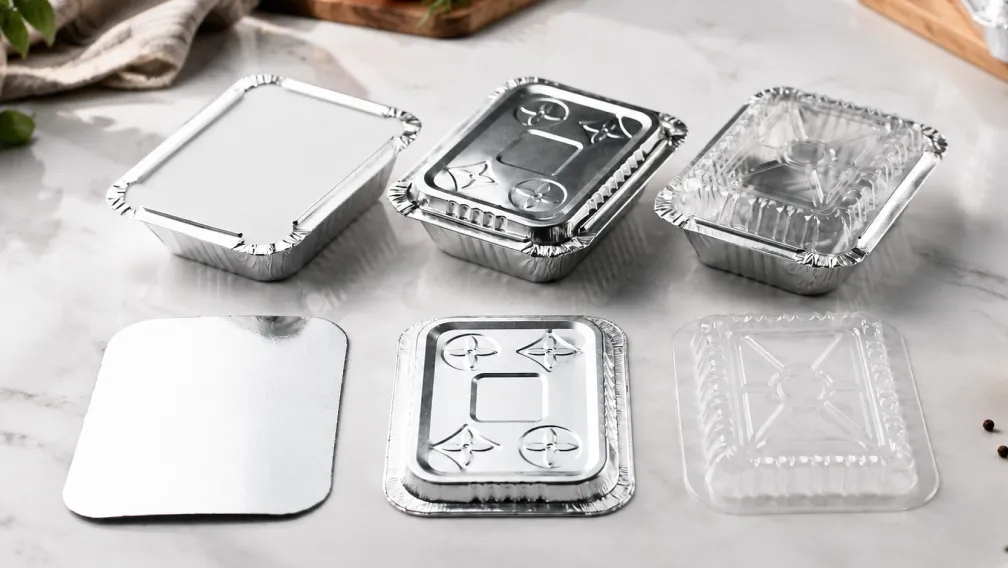
For bulk delivery, B2B caterers utilize rigid, foil-laminated board lids (such as the 2040-00-100 format). The board is placed flat over the GN 1/2 pan, and an automated crimping machine or manual tool folds the vertical lip of the Full-Curl rim down over the board's edge. This creates a highly secure, mechanical crimp seal. It locks in moisture and prevents liquid cross-contamination during transit. Because the resulting top surface is completely flat, logistics teams can safely stack multiple heavy half-pans inside insulated delivery boxes (like Cambro carriers), maximizing cubic volume in delivery vans.

EPR Taxation and the Economic Advantage of Single-Use Aluminum
The traditional alternative to foil pans is heavy, reusable stainless steel GN 1/2 pans. While durable, stainless steel introduces massive logistical bottlenecks. Reclaiming dirty steel pans from a hotel venue requires a dedicated reverse logistics vehicle trip. The pans must then be logged, scraped, and processed through high-temperature commercial dishwashers—consuming expensive labor hours, water, and chemical sanitizers. The blended cost of this return-and-wash cycle frequently exceeds €2.00 per pan.
Single-use aluminum half steam pans entirely eliminate this reverse logistics overhead. The caterer executes a "drop-and-go" delivery. After the event, the client simply rinses the pan and places it into the municipal recycling stream.
Furthermore, under the strict Extended Producer Responsibility (EPR) eco-tax frameworks in the EU, aluminum holds a highly privileged status. As a permanent material, it does not degrade during recycling. In municipal Material Recovery Facilities (MRFs), Eddy Current Separators easily capture the aluminum pans. Because remelting post-consumer aluminum requires only 5% of the energy needed for primary extraction, European environmental authorities assign aluminum to the lowest EPR taxation tiers. This allows large-scale food processors to optimize their supply chains while maintaining strict compliance with corporate sustainability mandates and EU green purchasing criteria.
Procurement Optimization for Buffet Lines
Integrating half-size pans into your commercial kitchen fundamentally upgrades your buffet presentation and logistical agility. By dividing a chafing dish into dual zones, caterers reduce food waste, increase menu variety, and streamline portion control. When specifying half steam pans, procurement directors must ensure they are sourcing deep-drawn 3003 or 8011 alloys with reinforced Full-Curl rims, guaranteeing the structural integrity required to move heavy payloads from the blast chiller, through the transport van, directly onto the high-heat buffet line.
-

SEPACK
Aluminum Foil Packaging Manufacturer
SEPACK supplies aluminum foil containers, rolls, sheets, baking pans, and food wraps to distributors and foodservice businesses in 50+ countries. Headquartered in New York with manufacturing in Shanghai, operating since 2010.