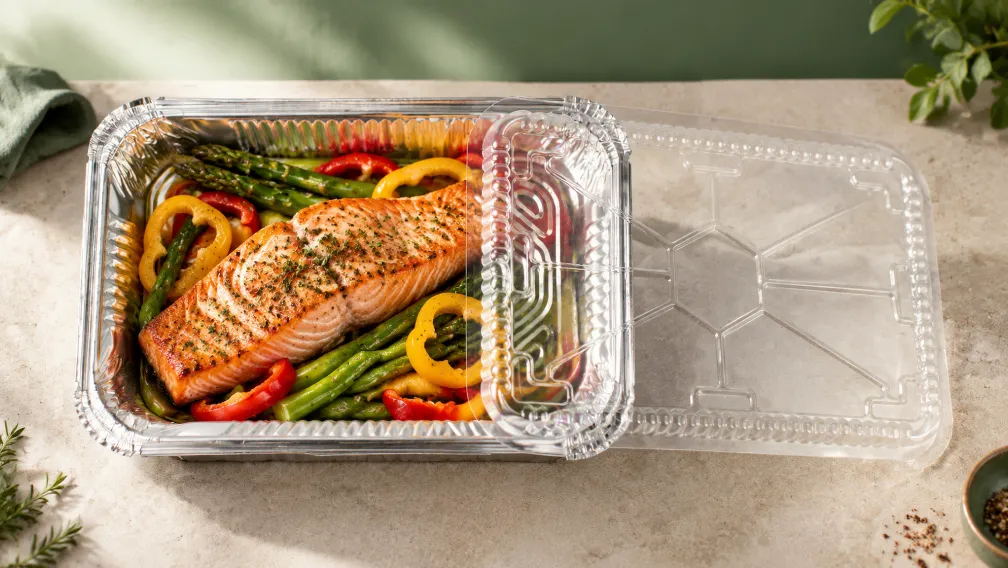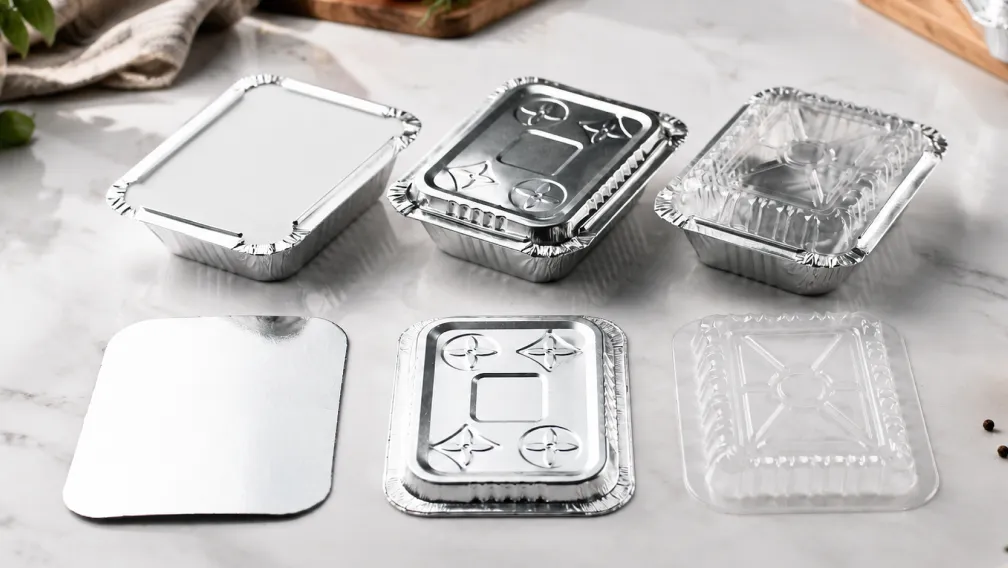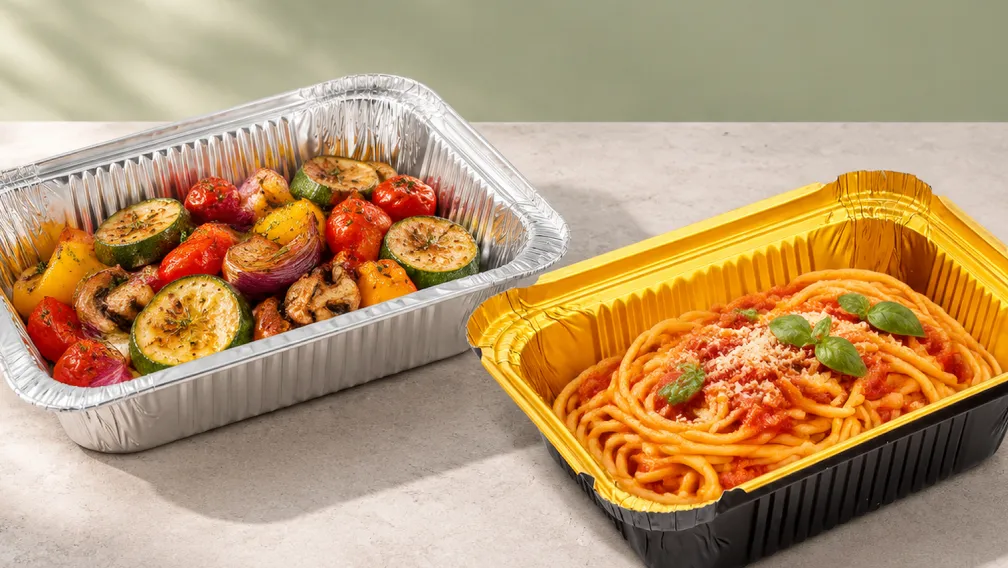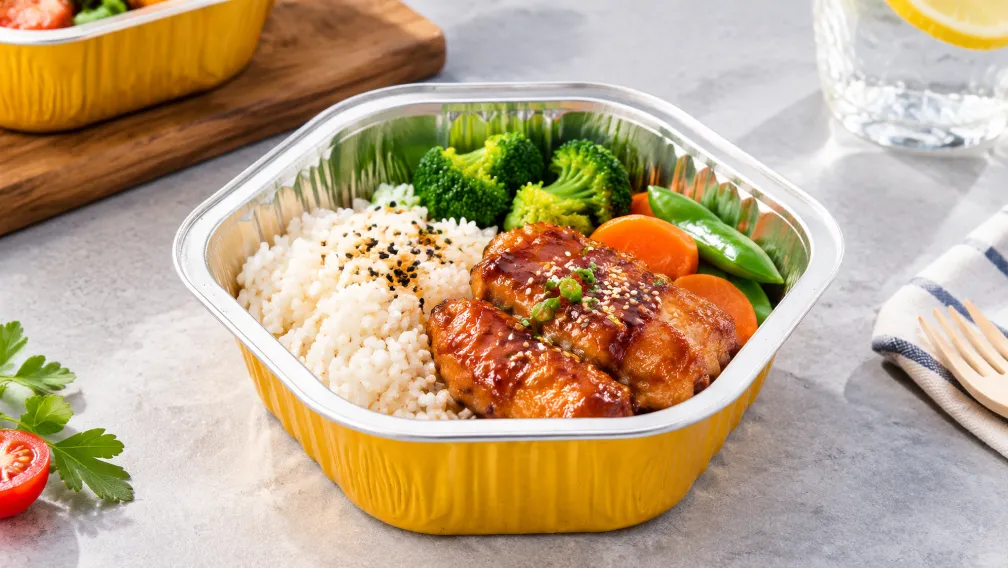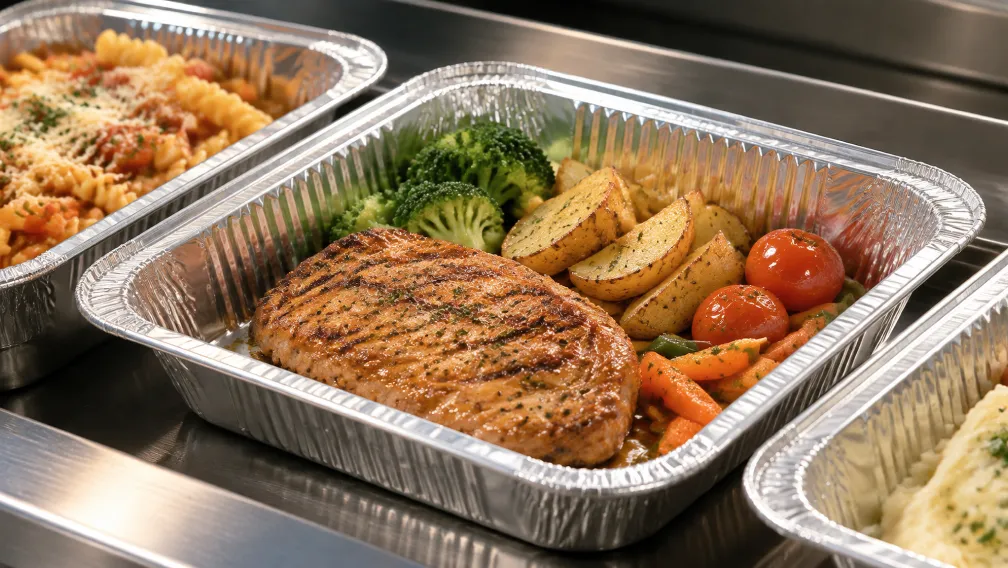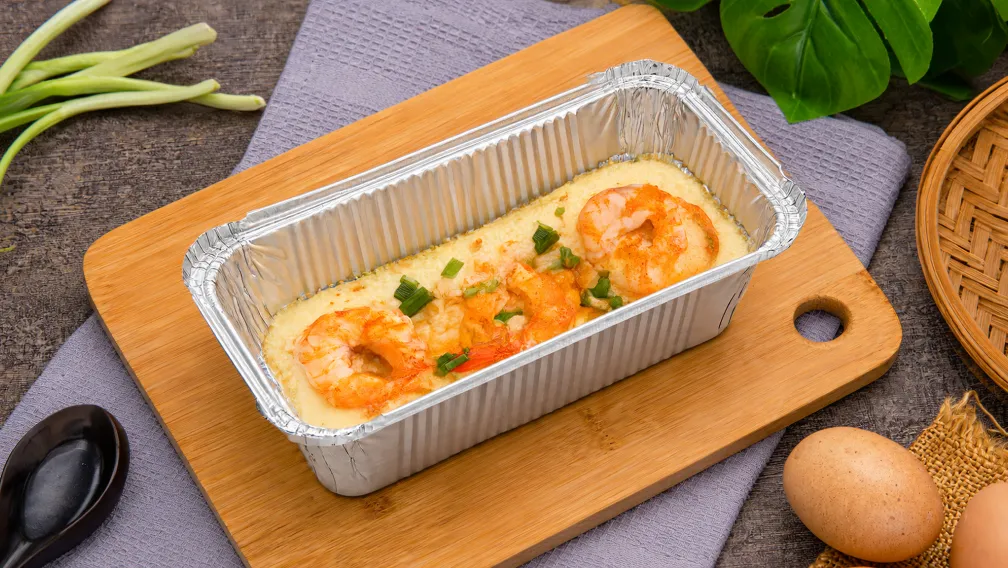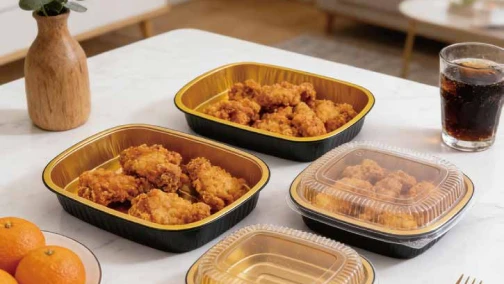


The European food packaging sector is executing a massive structural pivot. Governed by the Single-Use Plastics Directive (SUPD) and the incoming strictures of the Packaging and Packaging Waste Regulation (PPWR), food processors are systematically stripping CPET (Crystallized Polyethylene Terephthalate) and black polypropylene from their supply chains. The primary beneficiary of this material transition is the smooth-wall aluminum container. Unlike conventional wrinkle-wall takeaway pans, smooth-wall packaging is a highly engineered, precision-stamped vessel designed explicitly to execute hermetic heat sealing, withstand high-acid food contact, and satisfy municipal recycling mandates. Integrating this metallic packaging into automated ready-meal lines requires a strict understanding of drawing mechanics, polymer coatings, and modified atmosphere thermodynamics.
The Metallurgy and Mechanics of the Deep Draw
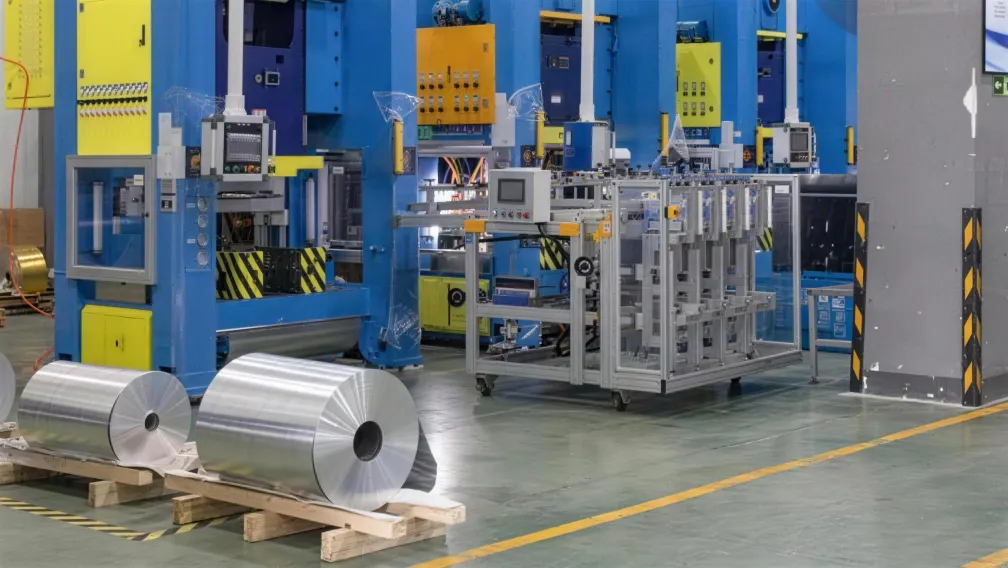
Forming a perfectly smooth sidewall from a flat sheet of metal introduces severe mechanical stress. In standard wrinkle-wall container production, excess aluminum gathers into fine corrugations as the punch drives the material into the die cavity. These wrinkles absorb the material displacement. Smooth-wall production explicitly forbids this. The metal must stretch, flow, and thin uniformly across the punch radius without buckling, fracturing, or creating microscopic pinholes.
This mechanical reality dictates the alloy specification. Standard 8011 aluminum, while adequate for takeaway pans, lacks the necessary elongation properties for deep, smooth-drawn cavities. European smooth-wall production relies heavily on the 8006 aluminum alloy, typically supplied in an O-temper (fully annealed) state. Alloy 8006 contains higher concentrations of iron and manganese, significantly increasing its tensile strength and deep-drawability. When subjected to the immense holding force of the blank holder and the downward stroke of the press, the 8006 matrix elongates uniformly. The die clearance—the microscopic gap between the punch and the die wall—is engineered to exact micron tolerances to "iron" the metal flat as it draws, resulting in a structural sidewall that is rigid, defect-free, and visually flawless.
Hermetic Flange Engineering and Modified Atmosphere Packaging (MAP)
The operational core of the smooth-wall container is its flange (the top rim). European ready-meal logistics rely on Modified Atmosphere Packaging (MAP) to achieve shelf lives of 14 to 28 days without chemical preservatives. MAP involves evacuating ambient oxygen from the package and flushing the headspace with a calculated mixture of nitrogen and carbon dioxide. Trapping this gas requires an absolutely perfect hermetic seal.
The smooth-wall stamping process generates a wide, completely planar flange devoid of any wrinkles, creases, or step-downs. This uninterrupted metallic plane provides the necessary anvil surface for automated heat-sealing heads. During the sealing cycle, a polymer lidding film is indexed over the tray. The sealing head descends, applying precise pressure (typically around 4 to 6 bars) and heat (180°C to 200°C) for a specific dwell time. This thermal energy melts the sealing layer of the film, fusing it directly to the heat-seal lacquer pre-applied to the aluminum flange. Because the smooth-wall flange is structurally rigid and perfectly flat, the resulting seal achieves extremely high burst strength, preventing gas leakage during high-altitude transport or rough handling in distribution centers.

Polymer Coating Systems for EFSA Food-Contact Compliance
Raw aluminum forms a natural oxide layer that protects it from atmospheric corrosion. However, the internal environment of a ready meal is highly aggressive. Ingredients featuring low pH values (such as tomato passata, citrus marinades, or vinegar-based dressings) combined with high sodium levels act as powerful electrolytes. If left unprotected, raw aluminum will suffer from galvanic corrosion and pitting, leading to metallic migration into the food mass and potential container failure.
To comply with stringent European Food Safety Authority (EFSA) migration limits, smooth-wall aluminum is coil-coated prior to stamping. The aluminum coil is unspooled through a massive coating line where specialized food-grade lacquers are applied. For the European market, these are predominantly BPA-NI (Bisphenol A Non-Intent) epoxies or advanced polyester systems. The coating process is usually dual-pass. The interior of the container receives a protective base coat to isolate the metal from the food, followed by a heat-sealable topcoat applied specifically to the flange area to bond with the lidding film. The exterior often receives a decorative lacquer (such as matte black, gold, or copper) to replicate the premium retail aesthetics of CPET plastics. Crucially, these dry film coatings (typically applied at 5 to 10 grams per square meter) must possess extreme flexibility to survive the deep-drawing press stroke without micro-cracking.
Overcoming the Microwave Stigma in European Retail
A significant historical barrier to aluminum adoption in the ready-meal sector was the consumer belief that metal cannot be placed in a microwave oven. As European processors transition away from microwave-transparent plastics, educating the market on aluminum microwave safety is mandatory. The physics of microwave interactions with metal are dictated by geometry, not just the material itself.
Extensive studies conducted by the Fraunhofer Institute for Process Engineering and Packaging (IVV) in Germany have conclusively demonstrated that aluminum foil containers are completely safe for microwave use when properly designed. Arcing (the sparking phenomenon) occurs when electromagnetic fields concentrate at sharp points or jagged metallic edges. The smooth-wall container, by definition, features continuous, sweeping radii and a smooth, rolled, or flat-pressed flange. There are no sharp points to act as antennas.
Furthermore, the depth of the container matters. Microwaves penetrate food from the top down. Because the aluminum sidewalls block lateral microwave penetration, smooth-wall ready-meal trays are engineered with a wide, shallow footprint. This maximizes the exposed top surface area of the food, allowing efficient, even heating. The only operational requirement is that the consumer fully removes the foil lid and places the tray in the center of the glass turntable, ensuring the aluminum does not physically touch the interior metal walls of the microwave cavity.
EPR Taxation and the Mechanics of Eddy Current Sorting
The ultimate catalyst driving the adoption of smooth-wall aluminum in Europe is financial. Extended Producer Responsibility (EPR) schemes legally require food producers to fund the end-of-life recovery and recycling of their packaging. Taxes are levied based on the recyclability profile of the material. Multi-layer plastics, such as EVOH-lined CPET or black plastics that absorb near-infrared (NIR) sorting lasers, are deemed highly problematic and are penalized with massive EPR fee multipliers.
Aluminum holds a privileged status as a permanent material. It can be recycled infinitely without losing its metallurgical integrity. In a modern European Materials Recovery Facility (MRF), aluminum trays are isolated with extreme efficiency using Eddy Current Separators (ECS). As the mixed waste travels along a conveyor, a high-speed magnetic rotor spins beneath the belt. This spinning magnetic field induces electrical currents (eddy currents) within the highly conductive aluminum tray. These currents generate their own magnetic field, which opposes the rotor's field, literally repelling the aluminum tray off the belt and into a dedicated recovery bin.
Because the separation process is automated, reliable, and yields high-value scrap metal, European EPR tax rates for aluminum packaging are a fraction of the cost of composite plastics. For a high-volume food processor, the savings generated in EPR tax reductions frequently offset the slightly higher initial unit cost of the smooth-wall aluminum container, delivering a net-positive operational ROI.
Specifying Smooth-Wall Infrastructure for Your Processing Line
Transitioning from plastic to metallic packaging is not a 1:1 drop-in replacement. It requires aligning the container's metallurgical specifications with the physical realities of your filling and sealing equipment. Procurement engineers must define the required draw depth, the specific lacquer system required by the food's pH profile, and the exact flange width necessary to interface with existing heat-sealing heads.
By utilizing properly engineered smooth-wall aluminum foil containers, food manufacturers can eliminate plastic taxes, secure MAP shelf life, and upgrade the retail presentation of their product lines. Partnering with a manufacturer that controls the alloy specification, the coil coating process, and the precision die-stamping guarantees that the final vessel will perform flawlessly from the heat-sealing line through to the consumer's microwave.
-

SEPACK
Aluminum Foil Packaging Manufacturer
SEPACK supplies aluminum foil containers, rolls, sheets, baking pans, and food wraps to distributors and foodservice businesses in 50+ countries. Headquartered in New York with manufacturing in Shanghai, operating since 2010.