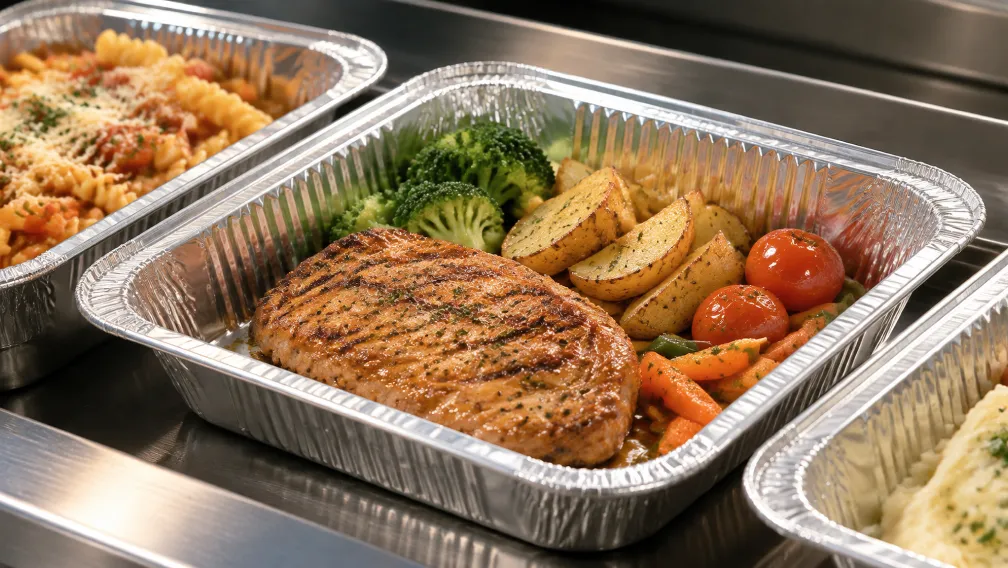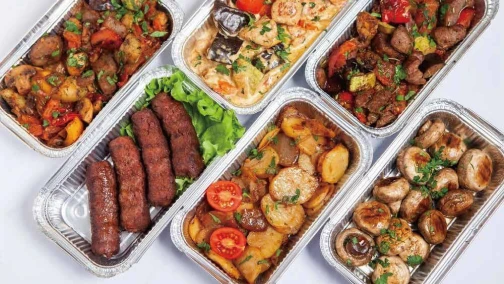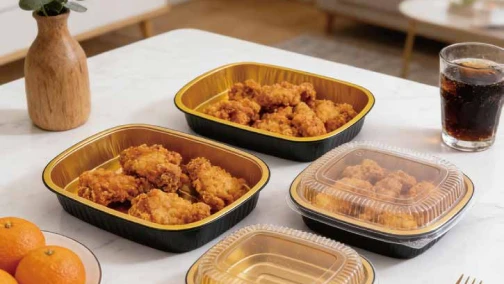


Commercial catering and high-volume food service operate on rigorous standardization. At the core of this operational efficiency is the steam table pan, a modular packaging unit designed to transition seamlessly from industrial preparation ovens directly into heated chafing dish racks. Unlike typical consumer packaging, steam table pans must meet demanding structural and thermodynamic requirements. A full-size deep pan loaded with baked ziti or roasted meats can weigh upwards of 15 to 20 pounds. Transporting, heating, and serving from a disposable vessel of that weight demands precise aluminum alloy specifications, engineered wall geometry, and strict dimensional tolerances.
The Mechanics of Gastronorm and American Dimensional Standards
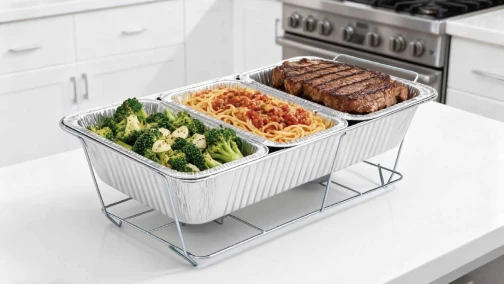
The global food service industry utilizes strict dimensional frameworks to ensure equipment compatibility. In North America, this is typically governed by the standard 12-inch by 20-inch chafing dish rack footprint. The entire ecosystem of commercial steam tables, holding cabinets, and speed racks is built around this dimension. Heavy-duty aluminum foil steam table pans are engineered to perfectly replicate the dimensions of traditional stainless steel "hotel pans" while providing the economic benefits of single-use packaging.
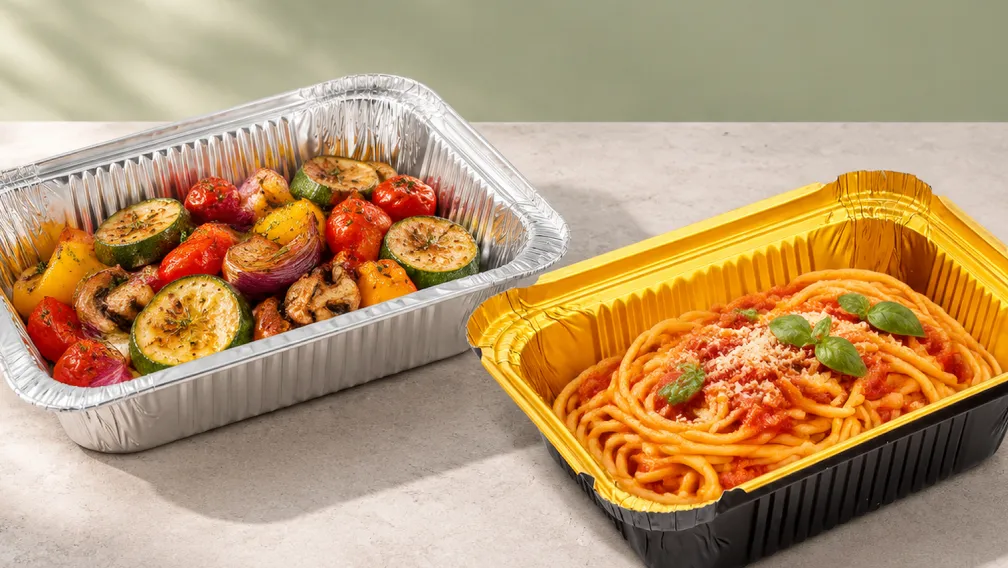
This modularity is divided into two primary categories. The Full-Size Steam Table Pan (such as the 4020 series for medium depth, or the 4021 series for deep capacity) occupies the entire 12x20 chafing rack. It is utilized for high-volume main entrees like briskets, large-batch pasta, or roasted vegetables. Conversely, the Half-Size Steam Table Pan (such as the 320 medium or 321-00-100 deep series) measures roughly 10x12 inches, allowing exactly two pans to sit parallel within a single full-size rack. This fractional sizing allows caterers to split a single heat source between two different menu items—for example, pairing a protein in one pan with a starch in the other—maximizing the utility of the serving station.
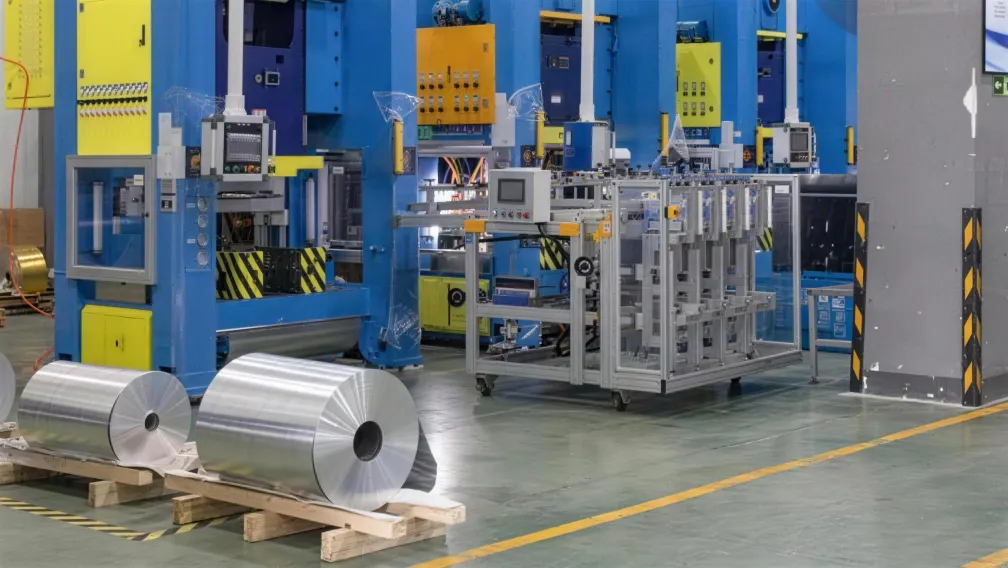
Maintaining exact rim-to-rim dimensions during the high-speed stamping process is critical. If a foil pan is stamped a few millimeters too wide, it will not drop into the rigid stainless steel water pan. If it is too narrow, it risks falling through the rack into the hot water bath below. Tooling and die maintenance on the manufacturing line are strictly calibrated to prevent dimensional drift across runs of millions of units.
Structural Integrity: Deep Draws and Wall Rigidity
Producing an aluminum container with a vertical depth exceeding three inches introduces significant metallurgical challenges. As the flat aluminum coil is driven into the female die by the press punch, the metal stretches. Drawing a deep steam table pan requires specific food-grade alloys, typically 3003 or specialized 8011 tempers, that possess high tensile strength and excellent elongation properties. Without the correct alloy, the metal will tear at the corners during the stamping stroke.
To support heavy catering payloads without buckling, the walls of the pan rely on wrinkle-wall geometry. The fine corrugations stamped into the vertical sidewalls act as structural columns, transferring the downward force of the food directly to the base. Furthermore, the most critical structural element is the rim. Heavy-duty steam table pans feature a "Full Curl" (FC) rim. By rolling the raw cut edge of the aluminum into a tight, continuous tubular hoop, the pan gains massive torsional rigidity. When a catering professional lifts a 15-pound pan out of an oven by its edges, it is this full-curl rim that prevents the aluminum from folding in half.

Thermodynamics: Heat Transfer in Water Baths and Chafing Dishes
The primary function of a steam table pan is to hold hot food at safe serving temperatures during an event, typically utilizing a chafing dish filled with a heated water bath. Thermodynamics dictates the efficiency of this process. Aluminum is a highly efficient thermal conductor, possessing a thermal conductivity rating of roughly 235 W/(m·K).
When an aluminum steam table pan is placed over the heated water bath, the thermal energy from the steam transfers almost instantaneously through the 0.1mm-thick foil bottom and into the food. This rapid heat transfer ensures that the food maintains a core temperature above 140°F (60°C), strict compliance with Hazard Analysis Critical Control Point (HACCP) food safety regulations. In contrast, heavy ceramic dishes or thick high-heat plastics act as thermal insulators. They block the heat of the chafing dish from reaching the food efficiently, creating dangerous temperature drop-offs that can lead to bacterial proliferation during a two-hour buffet service.
Additionally, this rapid thermal response works in reverse for blast-chilling. Central kitchens can load freshly cooked food into aluminum full-size pans and place them directly into commercial blast chillers. The aluminum rapidly pulls the residual heat out of the food mass, quickly bringing it down to a safe storage temperature below 40°F (4°C) for transport.
Lidding Systems: Transport Security and Heat Retention
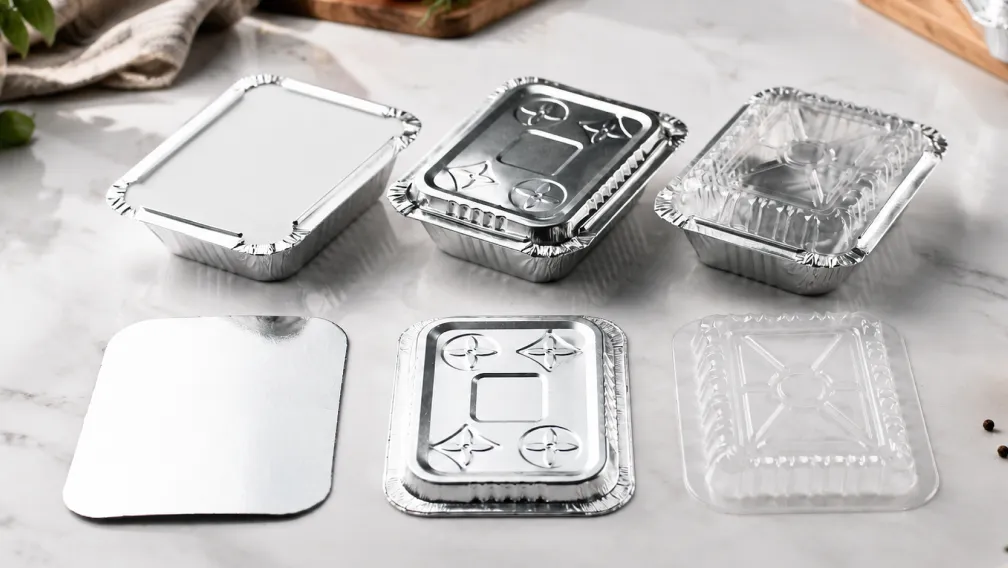
A steam table pan requires a secure lidding system to function within a commercial catering supply chain. Transporting liquid-heavy dishes like curries or baked beans in a delivery van necessitates a leak-resistant seal. For bulk transport and holding, caterers utilize flat aluminum foil lids (such as the 2050-00-50 for full-size pans and 2040-00-100 for half-size pans).
These rigid flat lids drop directly onto the pan. The operator then folds the vertical lip of the pan's rim downward, mechanically crimping the lid into place. This crimped perimeter creates a highly secure, splash-proof barrier that retains both heat and moisture during transit. Because the flat lids sit flush, operators can securely stack multiple full-size pans on top of each other inside insulated food carriers (like Cambro boxes), maximizing delivery vehicle capacity.
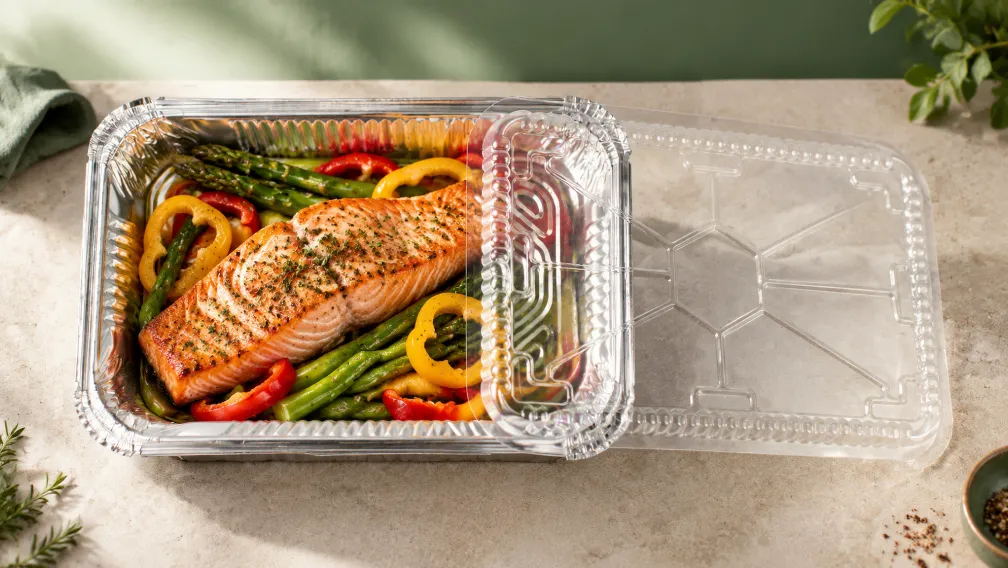
For high-end presentation or supermarket "Ready-to-Cook" retail displays, the aluminum lid is replaced with a clear PET dome lid (e.g., the 4209-80-50WDL setup). The clear dome allows for visual merchandising while maintaining the structural rigidity needed for retail shelf stacking, providing a versatile end-to-end packaging solution.
Operational Economics: Eliminating Reverse Logistics
The shift from stainless steel hotel pans to heavy-duty single-use aluminum pans is driven almost entirely by B2B operational economics. A high-quality stainless steel full-size pan represents a significant capital expenditure, often costing between $20 and $40 per unit. When a catering company dispatches 50 of these pans to an off-site corporate event, they incur massive hidden costs.
First is the issue of asset shrinkage; stainless steel pans are frequently lost, accidentally discarded, or stolen at venues, requiring constant capital reinvestment to maintain inventory. Second, and more importantly, is the cost of reverse logistics. To reclaim the stainless steel pans, a driver and vehicle must return to the venue the following day. The pans must then be transported back to the commercial kitchen and processed through a high-temperature commercial dishwasher. The combined cost of the return vehicle trip, labor hours for dishwashing, hot water, and chemical sanitizers frequently equates to $2.00 to $3.00 per pan.
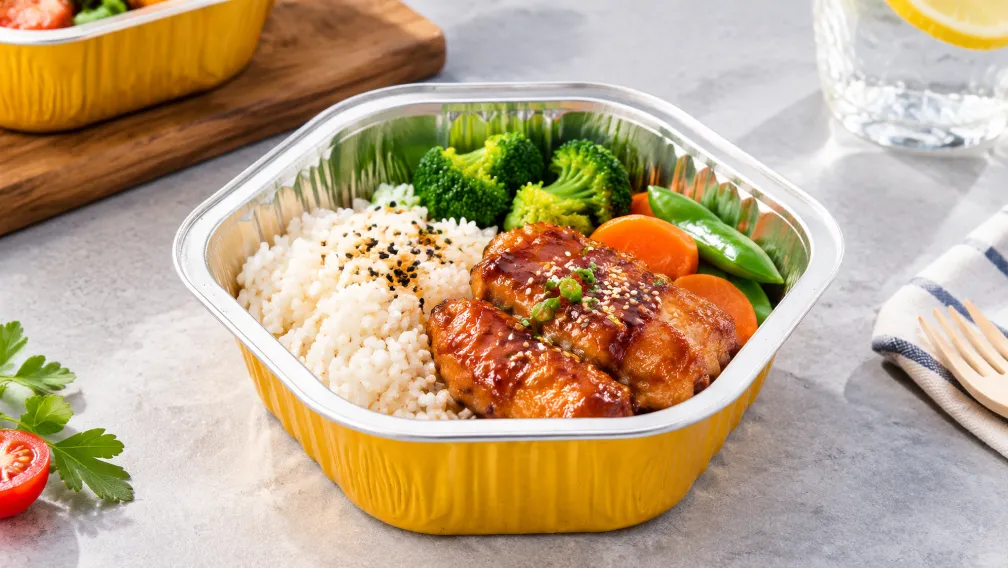
Single-use aluminum steam table pans convert this heavy fixed capital expenditure and variable cleaning cost into a single, predictable line item. The aluminum pan acts as the cooking vessel, the transport container, and the serving dish. Once the event concludes, the client simply recycles the aluminum on-site. The catering company executes a "drop-and-go" delivery, entirely eliminating the return trip, eliminating dishwashing labor, and allowing the business to take on multiple concurrent events without being bottlenecked by a limited inventory of stainless steel pans.
Material Lifecycle and Corporate Sustainability
Replacing durable stainless steel with single-use packaging naturally raises environmental compliance questions. However, aluminum occupies a unique position in the packaging lifecycle. It is a permanent material, meaning it can be recycled infinitely without any degradation in its metallurgical properties or structural integrity.
Commercial steam table pans, due to their large size and heavy gauge, are highly prized by municipal recycling facilities and scrap aggregators. Following a catering event, the pans are rinsed and enter the standard aluminum recycling stream. Re-melting post-consumer aluminum into new coil stock requires only 5% of the energy necessary to smelt primary aluminum from raw bauxite ore. This highly efficient closed-loop lifecycle allows high-volume food service operators to leverage the operational benefits of single-use trays while strictly adhering to corporate zero-waste mandates and municipal sustainability regulations.
Specifying the Correct Configuration for Your Kitchen
Integrating aluminum steam table pans into a commercial kitchen standardizes portioning, simplifies logistics, and guarantees thermal food safety compliance. When specifying these products, procurement managers must evaluate the depth requirements of their menus—utilizing medium-depth pans for high-yield, dense items like lasagnas, and deep pans for bulky items like roasted poultry or high-volume liquids.
Whether utilizing the 320/321 series half-size pans for modular buffet stations or the 4020/4021 full-size pans for maximum volume output, ensuring the foil features a reinforced full-curl rim and is drawn from heavy-duty 3003 or 8011 alloy is non-negotiable. By pairing these robust bases with proper crimping lids, catering operators can secure their entire cold-to-hot supply chain, protecting the structural integrity of their food and the profit margins of their operation.

-

SEPACK
Aluminum Foil Packaging Manufacturer
SEPACK supplies aluminum foil containers, rolls, sheets, baking pans, and food wraps to distributors and foodservice businesses in 50+ countries. Headquartered in New York with manufacturing in Shanghai, operating since 2010.