

Search
Enter keywords to search for products, blog posts, and more.

Enter keywords to search for products, blog posts, and more.
Pop-Up, Pre-Cut & Interfolded Foil Sheets for Foodservice — Wholesale, OEM & Private Label
SEPACK manufactures pre-cut aluminum foil sheets — the pop-up, interfolded wrap sheets that delis, burger counters and food trucks pull one at a time to wrap a sandwich without cutting or tearing. Each sheet dispenses flat and ready from the box, so service stays fast and every wrap is the same size. Standard and heavy-duty grades, plain or paper-backed, in sheet and square formats. Supplied wholesale and private-label, with custom sheet size, gauge and printing.

| Format | Typical Size | Grade | Best For | Custom |
|---|---|---|---|---|
| Pop-up sheet | 9 x 10.75 in / 12 x 10.75 in | Standard | Sandwiches, deli wraps | Yes |
| Interfolded sheet | To spec | Standard / Heavy | High-volume counters | Yes |
| Foil square | 9 x 9 in / 12 x 12 in | Standard / Heavy | Burgers, portions | Yes |
| Heavy-duty sheet | 12 x 12 in / 14 x 14 in | Heavy | Hot, greasy, heavy items | Yes |
| Paper-backed sheet | To spec | Foil + paper | Burgers, hot sandwiches | Yes |
Sheets dispense from pop-up boxes; sizes, gauge, backing and box count are cut to order. Plain foil, paper-backed and printed options available. For continuous rolls rather than pre-cut sheets, see aluminum foil rolls.


Foil sheets and foil rolls are the same material doing two different jobs. The roll covers and lines; the sheet wraps. For any operation that wraps food to order — a deli, a burger counter, a food truck — the pre-cut sheet is the faster, cleaner, more consistent choice, and it is bought differently from a roll. This guide covers the sheet formats, when to use sheets over rolls, and what to specify.
These three terms describe the same convenience from different angles. Pre-cut means the foil arrives as finished sheets, not a roll to cut. Interfolded means the sheets are folded into each other so pulling one lifts the next. Pop-up is the box that dispenses them one at a time, like tissues. Together they make a wrapping station where a worker pulls a single flat sheet, wraps, and grabs the next without ever touching a cutter — the format that runs most foodservice counters.
The rule is simple: wrap with sheets, line and cover with rolls. A counter wrapping sandwiches or burgers to order wants pre-cut sheets for speed, consistency and portion control. A kitchen lining sheet pans, covering steam tables or tenting roasts wants a roll it can size on the spot. Most foodservice operations buy both — sheets at the wrapping station, rolls in the back — which is why sourcing them together from one supplier keeps the program simple.
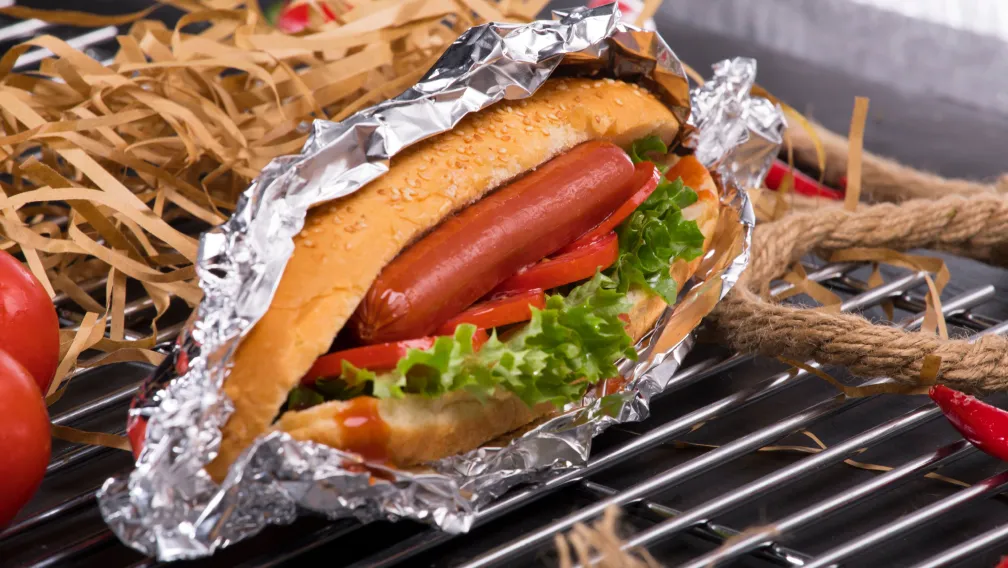
A plain foil sheet holds heat and shape and is right for most wrapping. A paper-backed sheet bonds paper to the foil so the paper face touches the food: it resists sticking to hot, greasy or cheesy items, adds a little insulation, and prints cleanly for branding. Burgers and hot sandwiches are the classic case for paper-backed. The closely related foil-laminated sandwich wrap covers the same need where a softer, more paper-like wrap is wanted.
Sheet size follows the food. A sandwich wants a different sheet from a burger or a full deli portion, and square sheets suit items wrapped from the center out. The point of pre-cut is consistency, so the size should match the most common item the counter wraps — too small and food is exposed, too large and foil is wasted on every wrap. Sheets and squares are cut to the buyer’s size rather than forced to a fixed one.
For a brand or distributor, sheets are a private-label product: the dispenser box carries the brand, sizes and printing, so a foodservice supplier or retailer sells under its own name. Boxes can run as white-box, retail-printed or foodservice cases, in the counts a counter goes through. The run is built to the brand’s sheet size, grade and artwork, sampled and approved before bulk.
Foil sheets are single-material aluminum and fully recyclable, the same as rolls and containers, and recycling aluminum uses a small share of the energy of primary production. Paper-backed sheets separate for recycling where facilities allow. Every sheet is food-grade and meets FDA and EU food-contact requirements, so it clears North American, European and export markets for foodservice and retail.