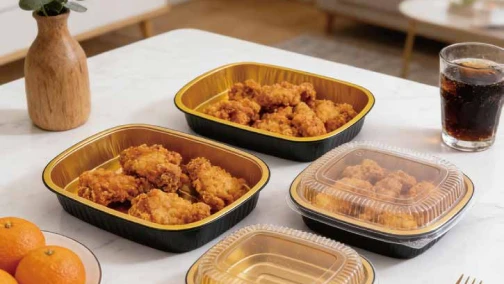


Few packaging questions come with as much inherited fear as this one. Most people grew up hearing that metal never goes in the microwave, full stop. The accurate answer is narrower and more useful: an aluminum foil container can go in the microwave safely when it is in good condition and you follow a short set of placement rules. That is not a marketing claim. It is the conclusion of a formal study run on more than 200 food portions, and it is how we advise the ready-meal brands we supply. Here is the evidence, the physics behind the sparking stories, the exact rules to follow, and what this means if you sell food in foil trays.
What the research actually says
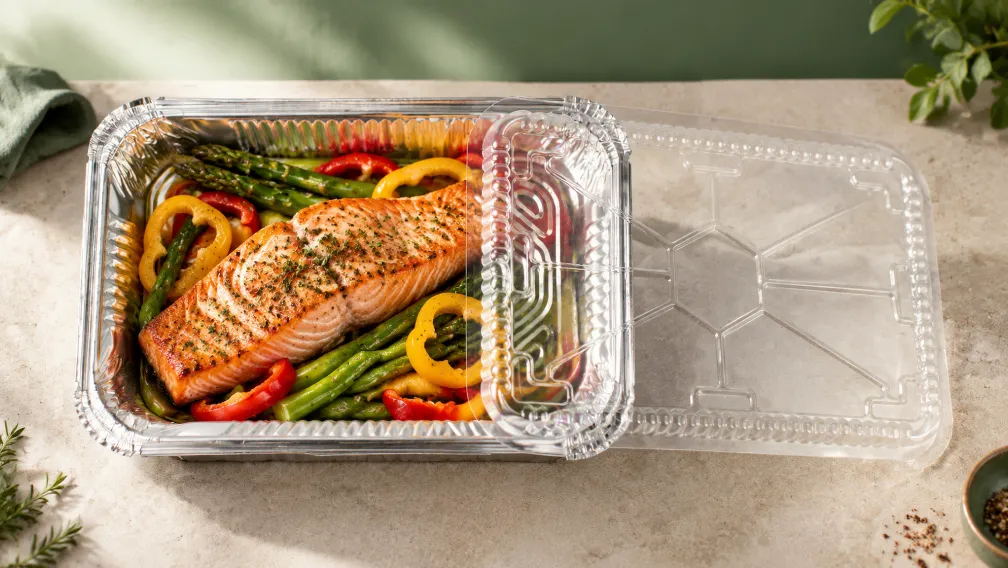
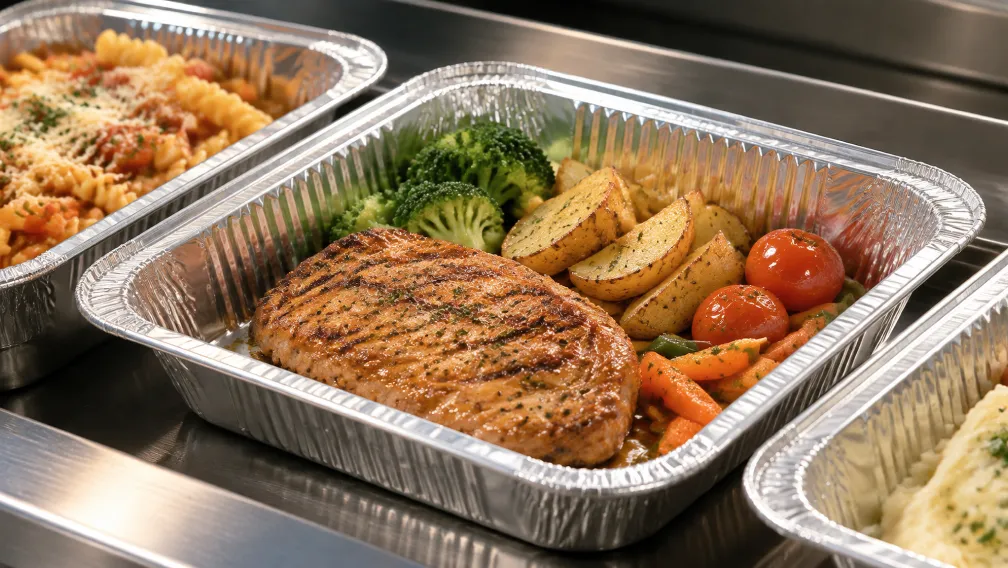
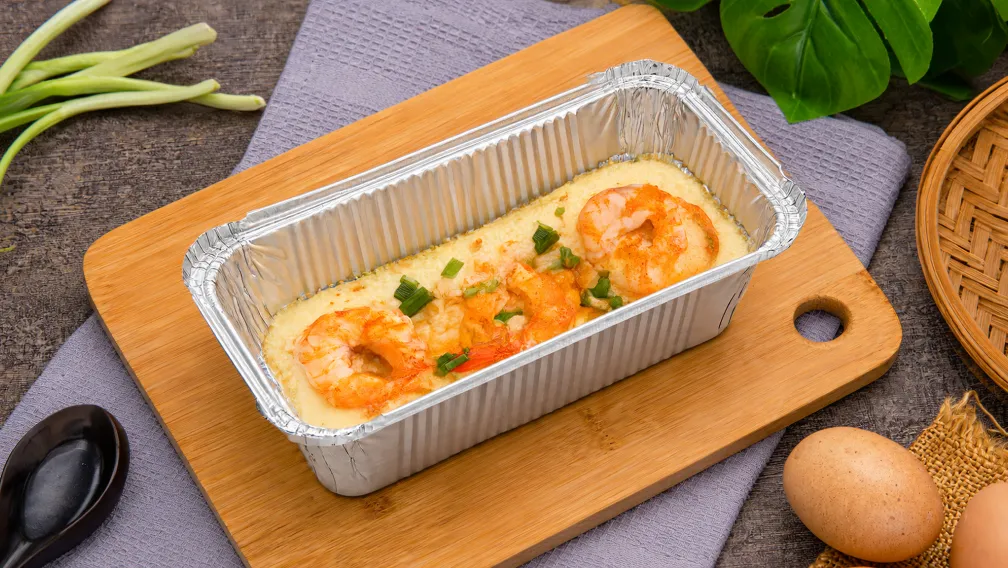
The definitive work on this question comes from the Fraunhofer Institute for Process Engineering and Packaging IVV in Freising, Germany, commissioned by the European Aluminium Foil Association with support from the Aluminium Foil Container Manufacturers Association. Researchers heated more than 200 food portions — tap water, egg batter, frozen lasagne, minced meat, noodle soup and a children's menu — in aluminum foil trays and in packs with foil or foil-laminate lids, across four ordinary kitchen microwaves set to maximum power. The result: not a single case of damage to an oven or danger to a user. The study's conclusion states plainly that microwave heating of food packaged in aluminum foil trays is perfectly viable.
One finding deserves attention because it surprises people. Lasagne heated in a foil tray came out looking better than in plastic — the aluminum helped form a browned crust on the surface. In some test configurations, heating uniformity in foil trays was better than in comparable plastic trays. The microwave question is not only about avoiding harm; geometry and material can work in your favor.
Why foil sparks sometimes — the actual physics
Microwaves heat food by agitating water molecules. Metal does not absorb that energy; it reflects it, and electric charge concentrates on the metal surface. On a smooth, flat surface the charge spreads out and nothing visible happens. On a sharp point, a tear, a crease or a crumpled edge, the charge concentrates until it discharges as a visible spark — called arcing. Arcing is what damages oven interiors and, in the worst case, scorches the waveguide cover behind the cavity wall.
This is why the folk rule "no metal in the microwave" exists. A crumpled ball of kitchen foil arcs immediately. Forks arc at the tine tips. Gold-trimmed plates arc along the trim. A smooth-wall foil tray with intact edges, placed correctly, does none of this. The variable is geometry, not the material itself. It is also why appliance makers like Whirlpool state that aluminum foil can be used in their microwaves for shielding, provided it stays flat and clear of the cavity walls.

The five rules for microwaving a foil container
EAFA's usage guidelines reduce safe practice to five checks. They apply whether you are a consumer reheating a takeaway or a brand writing the heating instructions for a ready-meal pack.
- Remove the lid. Take off foil and board lids completely, or vent them loosely per the pack instructions. A flat foil lid reflects microwaves off the top of the food and slows heating.
- Fill most of the base. The meal should cover the majority of the tray bottom. An empty or nearly empty container has no load to absorb the energy, which raises arcing risk.
- Center it on the turntable. Middle of the glass plate, always on the turntable, never on a metal rack.
- Keep it clear of the walls. Leave at least an inch — 2.5 cm — between the tray and every cavity wall, the ceiling and the door.
- One tray at a time. Two trays can sit close enough to arc between their rims, and they shadow each other's heating.
If you ever see a blue flash or hear popping, press stop before opening the door, let the tray cool, and check the container for damage before reusing the oven.
Heating performance: depth, geometry and cold spots
Because the tray walls reflect microwaves, energy reaches the food mainly from the open top. That makes depth the controlling variable for evenness.
| Tray depth | Heating pattern | Practical advice |
|---|---|---|
| Shallow (up to about 1.2 in / 3 cm) | Most even | Best for microwave reheating; pasta, rice, single-layer meals |
| Medium (1.2 – 2 in / 3 – 5 cm) | Moderate | Stir or rotate once mid-cycle |
| Deep (over 2 in / 5 cm) | Cold spots likely at the base | Prefer the oven, or reheat longer at reduced power with a stir |
Two habits close most of the gap. Stirring halfway through redistributes the hot top layer, and a one-to-two-minute standing rest after the cycle lets conduction finish the job. Expect foil trays to run slightly longer than plastic for the same portion in some configurations — the Fraunhofer tests observed exactly that, alongside cases where the foil tray heated more uniformly. Tray geometry and food type decide which way it goes, so brands should validate heating times on their own packs.
Which foil containers belong in the microwave
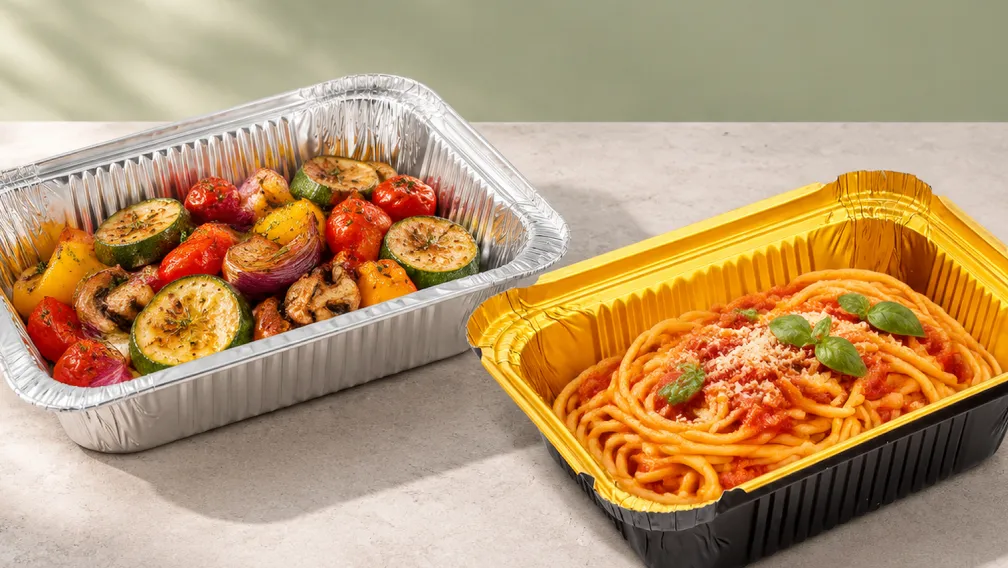
Container construction matters as much as placement. Smooth-wall aluminum containers are the right format for microwave applications: the flat, crease-free walls present no sharp geometry for charge to concentrate on, and the lacquered food-contact surface holds up through reheating. Heavily wrinkled trays are not automatically unsafe, but every crease is a potential concentration point, and a tray that has been crushed or torn in transit should go to recycling, not into the microwave.
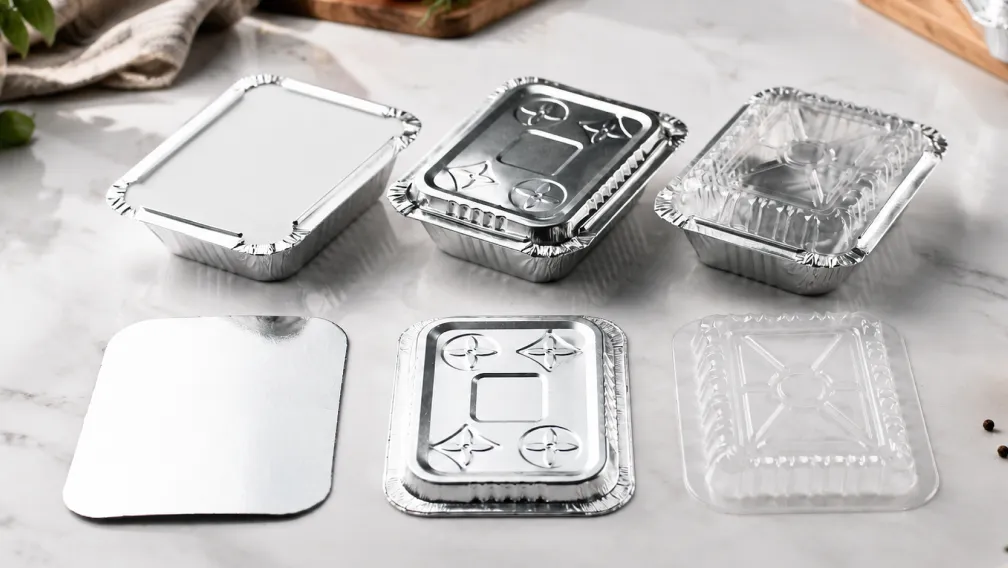
Lids are the second checkpoint. A foil-laminated board lid or a full foil lid must come off before microwaving — it shields the food from the energy and its flat expanse is the largest reflector in the oven. If your pack needs a microwave-compatible top, that is a specification decision at the design stage, and our containers with lids range covers the ventable options. For the oven side of the same question, our guide to oven-safe foil containers covers temperatures and limits.
What this means for ready-meal and takeaway brands
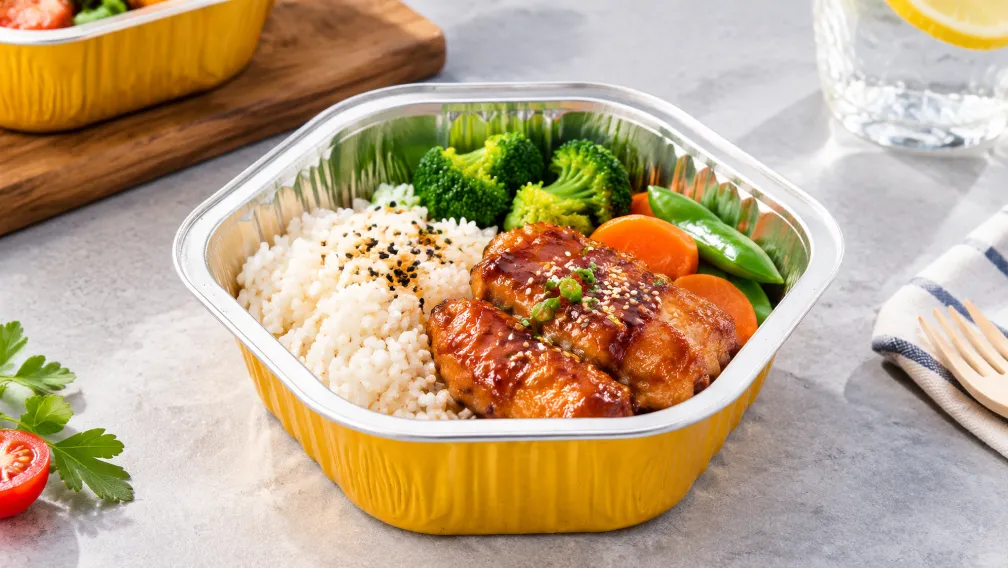
Dual-ovenable packaging — one tray that handles oven and microwave — is where the market has been moving for years, because reheating flexibility is a purchase criterion for the end consumer. A foil tray that passes both removes the last objection a buyer has against switching from plastic. Three practical implications for brands:
- Print the five rules on the pack. The Fraunhofer work showed consumers fear foil in the microwave largely because they have never seen instructions for it. Clear pack copy turns a perceived risk into a documented feature.
- Spec shallow-to-medium depths for microwave-first lines. The heating table above is a product-development input, not only consumer advice.
- Choose smooth-wall constructions for microwave SKUs. Crease-free geometry and a lacquered interior give the most predictable reheating behavior.
Food safety during microwave reheating follows the same rules as any method: bring the center of the portion to 165°F (74°C) for ready meals. And on the broader material question — migration, acidic foods, coated versus bare trays — our evidence review on foil container safety goes through the regulator data in detail.

When to skip the microwave
Some situations stay on the wrong side of the line regardless of technique. Never microwave an empty foil tray. Do not use a container that is torn, crushed or badly creased. Keep foil trays out of combination units while any metal rack or crisping pan is installed. Small decorative foil items with sharp pleats, and anything with metallic trim or staples, stay out entirely. And when the portion is deep, frozen solid and time-critical, the conventional oven remains the better tool — it heats from all sides and finishes with better texture.
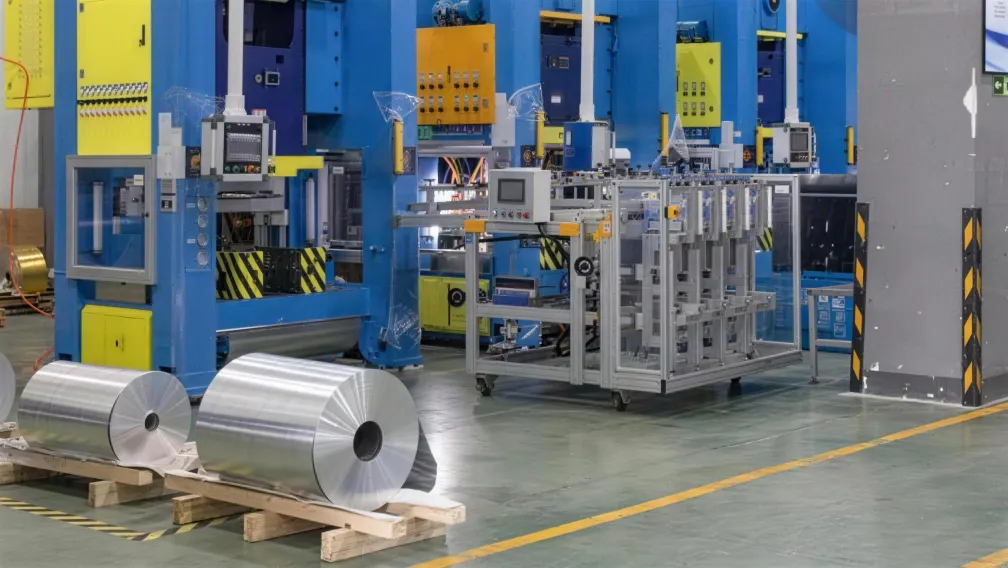
Building a dual-ovenable product line? We manufacture smooth-wall and wrinkle-wall aluminum foil containers in food-grade alloys certified to FDA, BRC, ISO and SGS, with microwave-suitable formats, ventable lid options and private-label packaging. Tell us your menu, portion size and reheating claim, and we will spec the tray and send samples for your own validation testing.
FAQ
Can you put an aluminum foil container in the microwave?
Yes, when the container is in good condition and you follow the placement rules: lid off, base mostly covered with food, centered on the turntable, at least an inch clear of the walls, one tray at a time. A Fraunhofer Institute study heated more than 200 portions in foil trays with no damage to ovens or risk to users.
Why does aluminum foil spark in the microwave but a foil tray does not?
Sparking — arcing — happens where electric charge concentrates on sharp geometry: crumples, tears, thin edges and points. A smooth-wall tray with intact edges has no concentration points, so the charge spreads harmlessly across the surface. A crumpled ball of thin kitchen foil is the opposite case.
Can you microwave a foil container with the lid on?
No. Remove foil and board lids, or vent them exactly per the pack instructions. A flat foil lid reflects microwaves away from the food surface, which slows heating and defeats the purpose.
Does food heat evenly in a foil tray?
Mostly from the top down, since the walls reflect energy. Shallow trays up to about 1.2 inches deep heat most evenly; deeper trays need a mid-cycle stir and a short standing rest. In some Fraunhofer test configurations, foil trays actually heated more uniformly than plastic equivalents.
Is it safe to microwave an empty foil container?
No. With no food to absorb the energy, charge builds on the metal itself and arcing becomes likely. Always have the base mostly covered with food.
Are smooth-wall foil containers better for microwaving than wrinkle-wall?
Yes. Smooth walls present no creases for charge to concentrate on, and the lacquered interior handles reheating well. Wrinkle-wall trays are not automatically unsafe, but any crushed or torn tray should be recycled rather than microwaved.
What temperature should a ready meal reach after microwaving?
The center of the portion should reach 165°F (74°C), the same target as oven reheating. Check the thickest or deepest point with a food thermometer, especially with deep trays where cold spots can persist at the base.
-

SEPACK
Aluminum Foil Packaging Manufacturer
SEPACK supplies aluminum foil containers, rolls, sheets, baking pans, and food wraps to distributors and foodservice businesses in 50+ countries. Headquartered in New York with manufacturing in Shanghai, operating since 2010.