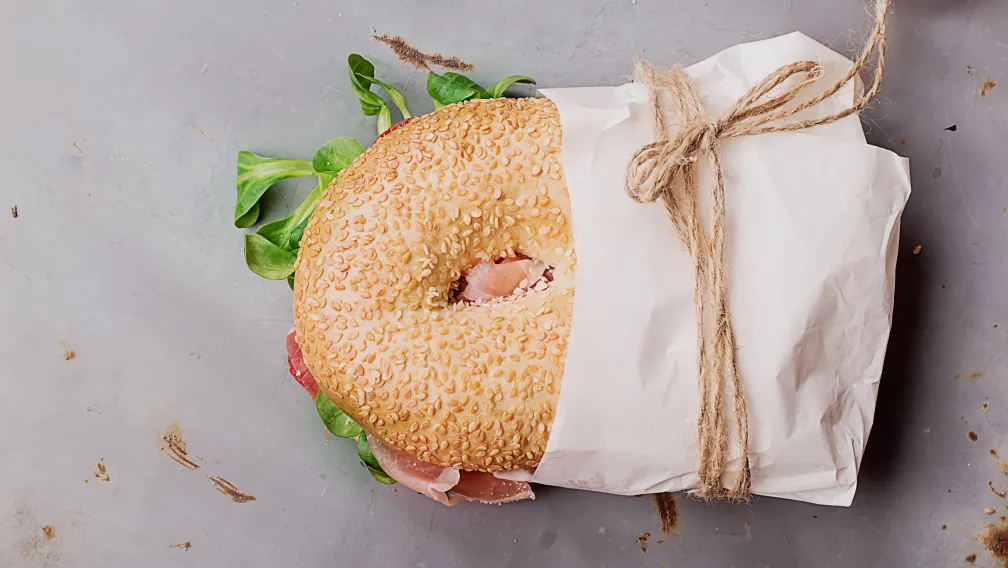


The European Quick Service Restaurant (QSR) sector, alongside commercial bakeries and industrial deli operators, is currently navigating the most aggressive regulatory intervention in the history of food-contact materials. The European Chemicals Agency (ECHA) and localized mandates—such as Denmark’s outright ban—are systematically eliminating Per- and Polyfluoroalkyl Substances (PFAS) from the supply chain. Historically, these "forever chemicals" were the foundational technology used to prevent hot fats from soaking through porous packaging. Engineering a compliant, high-performance sandwich paper without relying on fluorochemistry requires a fundamental redesign of the cellulose matrix, advanced aqueous barrier coatings, and rigorous mechanical testing protocols.
The Physics of Surface Energy and Grease Penetration
To understand the engineering challenge of PFAS replacement, one must first analyze the physical mechanics of grease penetration. Raw paper is manufactured from cellulose fibers, which form a highly porous, three-dimensional network. Cellulose is inherently hydrophilic (water-absorbing) and oleophilic (oil-absorbing). When a hot, lipid-heavy food item—such as a fried chicken patty, a mayonnaise-heavy sandwich, or a buttered croissant—makes contact with raw paper, capillary action immediately draws the liquid fat into the microscopic voids between the fibers.
PFAS chemicals solved this problem by manipulating surface energy. By applying fluorochemicals to the paper web during manufacturing, mills drastically lowered the surface energy of the substrate. Because the surface tension of the hot grease was higher than the surface energy of the fluorinated paper, the grease was forced to bead up, creating a high contact angle that prevented capillary absorption. Eliminating PFAS means packaging engineers can no longer rely on manipulating surface energy via fluorocarbons. Instead, grease resistance must be achieved through physical barriers and advanced mechanical densification of the cellulose structure.
Mechanical Densification: The Glassine Approach
One primary method for achieving fluorine-free grease resistance relies strictly on mechanical engineering during the paper milling process. This technique produces highly densified substrates such as glassine paper.
During the pulp preparation phase, the cellulose fibers are subjected to extreme mechanical refining and beating. This aggressive physical processing fibrillates the cellulose, fracturing the fibers and causing them to hydrate and bond extensively. Following the initial web formation on the paper machine, the semi-dry paper is passed through a supercalender—a vertical stack of alternating hard steel and soft synthetic rollers operating under immense hydraulic pressure and high temperatures. This intense compression literally crushes the cellulose fibers together, eliminating the internal air voids and creating an extremely dense, non-porous sheet.
Because the physical pores are closed, oil molecules are physically blocked from penetrating the substrate. Highly refined, supercalendered sandwich paper provides excellent natural grease resistance without a single chemical additive. However, mechanical densification has limits; glassine is relatively rigid and can suffer from reduced tear strength, making it challenging for high-speed wrapping operations that require high pliability.
Aqueous Barrier Coatings and Biopolymers
For applications requiring high flexibility, softer drape, and extreme grease resistance (such as wrapping hot, dripping burgers), manufacturers utilize aqueous (water-based) barrier coatings. These coatings form a continuous, non-porous film over the cellulose network.
Modern PFAS-free coatings are engineered from advanced acrylic dispersions, natural starches, or biopolymers like Polyhydroxyalkanoates (PHA) and Polylactic Acid (PLA). These barrier layers are applied using a size press or a dedicated offline coater. When the water carrier evaporates in the drying section, the polymer cross-links, forming a continuous physical shield across the surface of the paper. Oil molecules cannot penetrate this cross-linked polymer matrix. Procurement engineers evaluating these barrier-coated substrates must closely review the manufacturer's Declaration of Compliance (DoC) to ensure the specific aqueous polymers utilized are explicitly approved by the European Food Safety Authority (EFSA) under EU Regulation (EC) No 1935/2004.
Quantifying Grease Resistance: The TAPPI T 559 "KIT" Test
In B2B packaging procurement, grease resistance cannot be evaluated subjectively. It must be quantified using standardized industrial metrics. The global benchmark for measuring the oil repellency of paper and paperboard is the TAPPI T 559 standard, universally referred to as the "KIT Test."
The KIT test utilizes twelve specific reagent mixtures, numbered from 1 to 12. These reagents are precisely calibrated blends of castor oil, toluene, and heptane. KIT Number 1 contains the highest concentration of castor oil, making it the least aggressive and most viscous liquid. KIT Number 12 contains the highest concentration of heptane, giving it the lowest surface tension and the highest aggressive penetrating power.
During testing, an operator applies drops of the reagent onto the surface of the sandwich paper. After exactly 15 seconds, the drops are wiped away. If the paper surface shows a dark stain—indicating that the reagent penetrated the fiber matrix—the paper fails at that level. The highest numbered reagent that does not leave a stain determines the paper's official KIT rating.
For standard European QSR operations dealing with cold sandwiches or low-fat bakery items, a KIT rating of 3 to 5 is generally sufficient. However, for aggressive applications like hot fried chicken wraps, heavy mayonnaise sandwiches, or greasy pizza slices, procurement managers must specify sandwich paper achieving a KIT rating of 7 to 9. Achieving KIT 8 or higher without PFAS requires exceptionally robust aqueous coatings or extreme supercalendering.
Thermodynamics and Moisture Vapor Transmission Rate (MVTR)
Grease resistance is only half of the thermodynamic equation. Hot sandwiches generate significant amounts of latent steam. If a packaging substrate acts as an absolute vapor barrier (such as standard aluminum foil or thick polyethylene films), the escaping steam condenses against the interior wall of the wrapper, precipitating back onto the food. This moisture trap rapidly destroys the cellular structure of baked bread, resulting in a disastrously soggy product upon delivery.
Therefore, a highly engineered sandwich wrap must carefully balance oil resistance with its Moisture Vapor Transmission Rate (MVTR). The substrate must be dense enough to block heavy aliphatic hydrocarbons (fats and oils) but porous enough at the microscopic level to allow H2O vapor molecules to escape. Specialized PFAS-free papers achieve this by manipulating the grammage (thickness) of the aqueous coating. A micro-thin barrier coating will block the large triglyceride molecules found in food fats while permitting the much smaller water vapor molecules to slowly transpire through the sheet. This controlled breathability guarantees that the sandwich bun remains structurally intact and dry while the operator's hands remain completely shielded from the grease.
Operational Ergonomics: Dead-Fold and Slip Coefficients
In a commercial kitchen executing high-volume service, the mechanical handling characteristics of the paper are paramount. Wrapping a sandwich must take fractions of a second. The paper must possess excellent "dead-fold" characteristics. Dead-fold refers to the material's lack of elastic memory; when an operator creases the paper around a burger, it must deform plastically and hold that exact shape without springing open.
Additionally, the slip coefficient (the kinetic friction between two sheets) must be optimized. In QSR assembly lines, individual sheets of paper are drawn from a pop-up dispenser or a flat stack. If the surface friction of the aqueous coating is too high, the sheets will block (stick together), causing the worker to grab multiple sheets simultaneously. This operational failure doubles material costs and severely slows down the assembly line. Quality manufacturers precisely control the coefficient of friction during the coating process to ensure flawless, single-sheet dispensing.

EPR Taxation, Repulpability, and End-of-Life Compliance
Finally, B2B procurement decisions in the EU are heavily dictated by end-of-life disposal economics and Extended Producer Responsibility (EPR) taxes. Traditional multi-layer packaging—such as paper laminated heavily with polyethylene (PE) or wax—is notoriously difficult to recycle. Municipal Material Recovery Facilities (MRFs) penalize these composite materials, subjecting the food brand to punitive EPR taxation tiers.
Advanced PFAS-free aqueous barrier papers align perfectly with the EU circular economy. Because the barrier coating is exceptionally thin and water-based, the paper is classified as fully repulpable. When placed in a standard paper recycling stream, the hydrapulpers at the recycling mill easily break down the cellulose matrix, separating the fibers from the minimal polymer coating without clogging the screening equipment. By specifying repulpable, PFAS-free sandwich paper, commercial food operators eliminate their exposure to chemical compliance fines, bypass heavy plastic EPR eco-taxes, and deliver a superior, structurally sound hot food experience to the final consumer.
-

SEPACK
Aluminum Foil Packaging Manufacturer
SEPACK supplies aluminum foil containers, rolls, sheets, baking pans, and food wraps to distributors and foodservice businesses in 50+ countries. Headquartered in New York with manufacturing in Shanghai, operating since 2010.