

Europäische Großbäckereien, Zentralküchen und Aufback-Netzwerke von Supermärkten arbeiten unter enormem wirtschaftlichem und thermodynamischem Druck. Die Skalierung der Produktion bei gleichzeitiger Aufrechterhaltung handwerklicher Qualität erfordert die Beseitigung traditioneller Fertigungsengpässe – wie dem Waschen, Einfetten und manuellen Entformen von Backformen. Auf industriellen Gebäcklinien zur Herstellung von Frucht-Tartes, Quiches und traditionellen Pies hat sich die Aluminium-Kuchenform von einem einfachen Verpackungsartikel zu einer hochspezifischen Produktionskomponente entwickelt. Durch die Nutzung hervorragender Wärmeleitfähigkeit, entfallender Entformungsabläufe und einwandfreier Verformbarkeit unter extremen Minustemperaturen beim Schockfrosten optimieren präzisionsgestanzte Aluminium-Kuchenformen die industrielle Backeffizienz auf dem gesamten EU-Markt.
Thermodynamik: Wärmeübertragungsdynamik und Krustenqualität
Die Backwissenschaft wird grundlegend von der Kinetik der Wärmeübertragung bestimmt. Die Geschwindigkeit, mit der thermische Energie aus dem gewerblichen Ofenraum in den Rohteig gelangt, bestimmt die Stärkeverkleisterung, Proteinkoagulation und Feuchtigkeitsverdampfung.
Aluminium besitzt eine außergewöhnlich hohe Wärmeleitfähigkeit von etwa 235 W/(m·K) und übertrifft damit traditionelle Backsubstrate wie Kohlenstoffstahl (ca. 50 W/(m·K)) oder Keramikmaterialien bei Weitem. Wenn ein Konditor oder eine automatisierte Linie feuchtigkeitsreichen Pie- oder Quiche-Teig in eine Aluminium-Kuchenform füllt und diese in einen Stufen- oder Etagenofen einbringt, überträgt sich die thermische Energie nahezu augenblicklich durch das 0,05 mm bis 0,12 mm dicke Metall.
Diese schnelle Übertragung der Unterhitze ist entscheidend, um den berüchtigten „feuchten Boden“ bei Füllungen mit hohem Wassergehalt wie Apfel-Tartes oder Quiches zu verhindern. Die intensive Konduktionswärme festigt den Gebäckteig sofort, bevor die Flüssigkeitsmigration die untere Teigschicht beeinträchtigen kann. Gleichzeitig wird die Maillard-Reaktion gleichmäßig über den gesamten Boden und die gerillten Seitenwände ausgelöst, was zu einer knusprigen, golden-braunen Kruste führt, die den anspruchsvollen ästhetischen und geschmacklichen Standards europäischer Verbraucher entspricht.
Präzisionsstanzen und Konstruktion gerillter Seitenwände
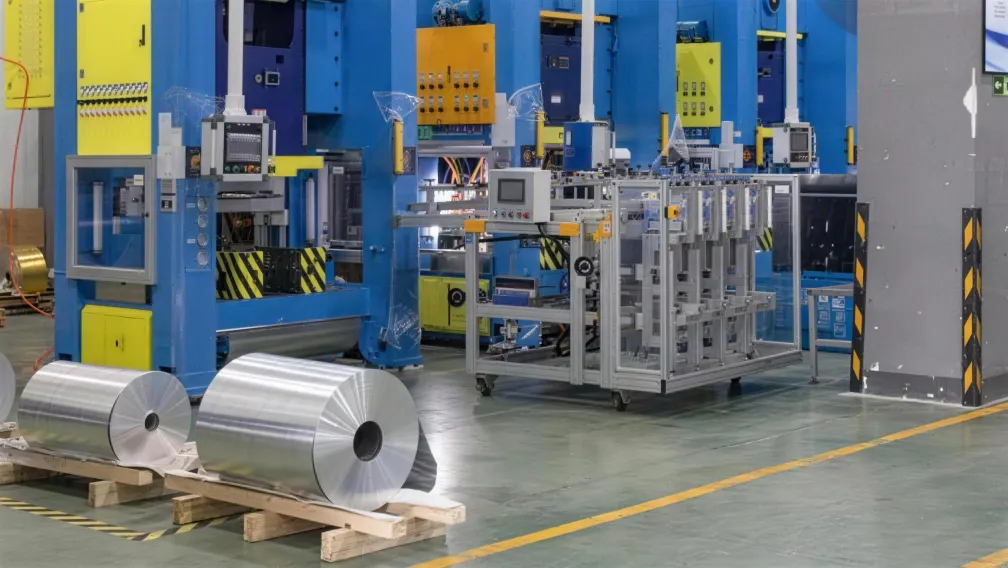
Die Herstellung einer hochleistungsfähigen Aluminium-Kuchenform erfordert fortschrittliche mechanische Presstechnik. Gestanzt aus lebensmittelechter Aluminiumlegierung 8011 oder 3003, muss die Behältergeometrie schwere, viskose Füllungen ohne strukturelle Durchbiegung stützen.
Das charakteristische Merkmal gewerblicher Kuchenformen ist die gerillte oder geneigte Seitenwand in Kombination mit einem Vollrollrand. Während des Hochgeschwindigkeits-Stanzhubs formt das Stanzwerkzeug präzise Wellrippen entlang der Wand. In der Baustatik wirken diese Rillen als tragende Säulen, die die vertikale Steifigkeit des dünnen Metallblechs drastisch erhöhen. Dies verhindert, dass sich die Behälterwände nach außen wölben, wenn sie mit dichten Füllungen wie Sahne, Mince-Füllungen oder dichten Fruchtkompotten befüllt werden. Darüber hinaus rollt der Vollrollrand (FC-Rand) die rohe Schnittkante zu einem kontinuierlichen rohrförmigen Ring auf und bietet die Torsionssteifigkeit, die für Montagearbeiter oder automatisierte Roboterarme erforderlich ist, um Tausende von Formen pro Schicht zu greifen, zu heben und zu stapeln, ohne das Gefäß zu verbiegen.

Beseitigung des Entformungsengpasses in Großbäckereien
In den hochpreisigen europäischen Arbeitsmärkten wird die betriebliche Rentabilität von der Durchsatzgeschwindigkeit und der Minimierung des Arbeitseinsatzes bestimmt. Traditionelle Bäckereien, die schwere, wiederverwendbare Stahl-, Gusseisen- oder Silikonformen verwenden, stehen vor einer schweren logistischen Hürde: dem Entformungs- und Waschzyklus.
Bei der Verwendung wiederverwendbarer Backformen müssen gebackene Pies vor der Verkaufsverpackung mechanisch oder manuell aus den Formen entnommen werden. Diese Entformungsphase führt unweigerlich zu Oberflächeneinrissen, Produktverformungen und Ausschuss. Nach der Entnahme müssen die verschmutzten Metallformen zu industriellen Waschanlagen transportiert werden, wo sie vor dem nächsten Backdurchgang einer Hochtemperatur-Desinfektion (über 85 °C), aggressiven chemischen Behandlungen, gründlicher Spülung und erneuter Einfettung unterzogen werden. Die kombinierten Kosten für Arbeitsstunden, thermische Energie, chemische Reinigungsmittel und Abwasseraufbereitung stellen eine schwere finanzielle Belastung dar.
Die Aluminium-Kuchenform setzt ein rationalisiertes „Bake-and-Sell“-Betriebsmodell um. Der Rohteig wird direkt in den Folienbehälter gegeben, gebacken, gekühlt, verpackt und in exakt demselben Gefäß an die Verkaufsregale der Supermärkte geliefert. Das Entformen entfällt vollständig, was die Bruchrate der Produkte nahezu auf Null senkt. Der Behälter fungiert als dauerhaftes, schützendes Exoskelett, das empfindliche Krusten in der Transportlogistik schützt und den Aufwand für die Rücklogistik und Reinigung komplett eliminiert.
Belastbarkeit in der Kühlkette: Schockfrosten und Thermoschock
Der moderne europäische Backwareneinzelhandel stützt sich stark auf die zentralisierte „Bake-off“-Lieferkette, bei der rohe oder halbgebackene Gebäckwaren in großen industriellen Knotenpunkten zusammengestellt, schockgefroren und zur abschließenden Fertigbackung an lokale Filialen verteilt werden.
Diese Lieferkette setzt die Verpackung brutalen Temperaturunterschieden aus. Aluminium behält seine volle metallurgische Verformbarkeit und strukturelle Integrität auch bei extremen Minustemperaturen bei. Befüllte Aluminium-Kuchenformen können direkt in Spiral-Schockfroster gefahren werden, die bei -40 °C arbeiten. Im Gegensatz zu spröden Kunststoffen, die unter plötzlicher Belastung zersplittern, oder Glas, das durch Thermoschock bricht, absorbiert Aluminium die extreme Kälte, ohne seine mechanische Widerstandsfähigkeit zu verlieren.
Wenn der gefrorene Bestand die Aufbackstation im Einzelhandel erreicht, überführen die Bediener die Form direkt aus dem Froster in einen vorgeheizten Umluftofen mit 210 °C bis 230 °C. Die Aluminium-Kuchenform bewältigt diese Temperaturdifferenz von 260 Grad augenblicklich ohne Verzug, Ausgasung oder Leistungsverlust und gewährleistet so absolute Lebensmittelsicherheit und Kontinuität im Betrieb.
EFSA-Konformität, Beschichtungen und EPR-Nachhaltigkeit
Die europäischen Vorschriften für Materialien mit Lebensmittelkontakt (wie die EU-Verordnung (EG) Nr. 1935/2004), die von der Europäischen Behörde für Lebensmittelsicherheit (EFSA) durchgesetzt werden, gehören zu den strengsten weltweit. Beim Backen säurehaltiger Füllungen – wie Kirsch-, Zitronen- oder Rhabarber-Tartes – kann blankes Aluminium bei längerem Kontakt gelegentlich lokale galvanische Lochkorrosion aufweisen.
Um dem entgegenzuwirken, können industrielle Aluminium-Kuchenformen mit lebensmittelechten, BPA-NI-geschützten (Bisphenol A Non-Intent) Epoxy- oder Polyesterlacken ausgestattet werden. Diese mikrodünnen Polymerbarrieren isolieren die aggressiven Fruchtsäuren vom Metallsubstrat, während die schnelle Wärmeleitfähigkeit von Aluminium erhalten bleibt.
Aus ökologischer Sicht ist Aluminium ein permanenter Werkstoff, der unter den europäischen EPR-Steuerrahmen (erweiterte Herstellerverantwortung) massive Vorteile bietet. Im Gegensatz zu mehrschichtigen oder silikonbeschichteten Papieren, die kommunale Recyclingsysteme verstopfen, werden Aluminium-Kuchenformen in Abfallvorsortieranlagen mithilfe von Wirbelstromabscheidern (ECS) leicht erfasst. Da das Recycling von Alt-Aluminium nur 5 % der für die Primärgewinnung benötigten Energie erfordert, zieht Aluminiumverpackung deutlich niedrigere EPR-Ökosteuersätze nach sich und schützt europäische Lebensmittelverarbeiter vor steigenden Umweltabgaben.
Beschaffung hochleistungsfähiger Aluminium-Kuchenformen
Die Auswahl des richtigen Pie-Behälters erfordert die Abstimmung der Abmessungsspezifikationen mit automatisierten Industrielinien, dosierenden Abfüllmaschinen und Verkaufsstandards. Unabhängig davon, ob Standard-9-Zoll-Formen oder extradiefe Schwerlastformate beschafft werden, garantiert die Partnerschaft mit einem erfahrenen Hersteller präzise Legierungshärten, makellose Rillengeometrie und zertifizierte Konformität für den Lebensmittelkontakt. Durch die Integration präzisionsgefertigter Aluminium-Kuchenformen in europäische Bäckereilinien sichern sich industrielle Verarbeiter eine hervorragende thermische Backleistung, eliminieren arbeitsintensive Waschzyklen und optimieren die Gesam rentabilität der Lieferkette.
-

SEPACK
Hersteller von Aluminiumfolien‑Verpackungen
SEPACK liefert Aluminiumfolien‑Behälter, Rollen, Folienblätter, Backpfannen und Lebensmittelverpackungsfolien an Händler und Gastronomieunternehmen in mehr als 50 Ländern. Der Hauptsitz befindet sich in New York, die Produktion in Shanghai; das Unternehmen ist seit 2010 tätig.